
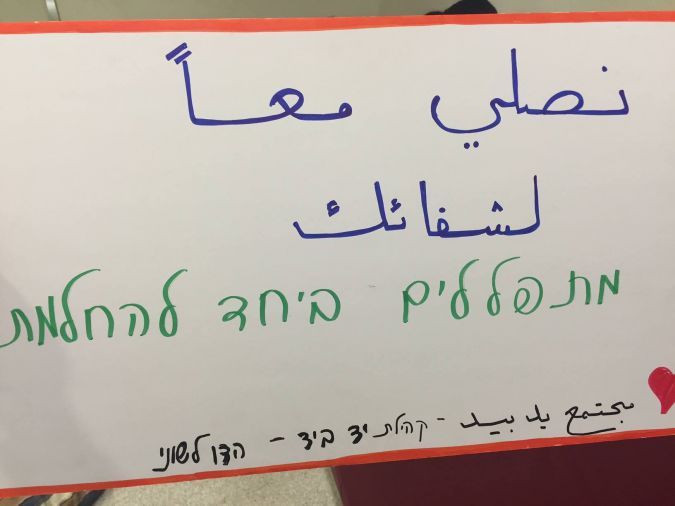
Jewish and Arab students had created a “get better card” in Hebrew and Arabic for Richard Lakin, which they had brought to the hospital.
* Please “like” these dispatches on Facebook here www.facebook.com/TomGrossMedia, where you can also find other items that are not in these dispatches.
CONTENTS
1. Former Iranian President Rafsanjani admits Iran aimed (aims) for nukes
2. Ex-Paris police commissioner moves to Israel, citing bad situation for Jews in France
3. The Jews of France can go to Israel, but where can the French go?
4. In the wake of the J.K. Rowling letter…
5. Richard Lakin
[Notes below by Tom Gross]
FORMER IRANIAN PRESIDENT RAFSANJANI ADMITS IRAN AIMED (AIMS) FOR NUKES
Former Iranian President Akbar Hashemi Rafsanjani has admitted what Israel has maintained all along (and critics of Israel in the western media have doubted): that Iran’s nuclear program was launched in order to build nuclear weapons. The BBC and other media have continually repeated the regime’s misinformation that its massive uranium enrichment program was for non-military purposes.
Rafsanjani made the remarks on Monday to the state-run IRNA news agency, reports Agence France Presse and other media.
This is the first time such a senior regime insider has admitted Iran wants a nuclear weapon. Rafsanjani did not say whether the regime would now like to acquire nuclear weapons.
Iran has been trying to build a nuclear weapon since the 1980s but has been thwarted in various ways by successive Israeli governments.
In the past, and in defiance of the United States, Israel has also prevented the regimes of Saddam Hussein in Iraq, and of Bashar Assad in Syria, from developing a nuclear weapons program.
Not only has Israel prevented these genocidal tyrants from obtaining such deadly weapons, but the site of Syria’s nuclear program bombed by Israel in 2007 now lies in territory captured by ISIS, so presumably the outside world should also acknowledge that it was a good thing Israel acted in defiance of almost the whole world (including every senior member of the Bush administration apart from Dick Cheney) and ISIS doesn’t now have nuclear weapons.
In the interview published on Monday, Rafsanjani revealed that Iran’s nuclear program was also helped by controversial Pakistani nuclear scientist Abdel Qader Khan, who is reported to have sold nuclear weapons technology to North Korea.
Rafsanjani said he and the country’s now Supreme leader Ayatollah Khamenei, who was at the time a mere politician and a close confidante of then supreme leader Ayatollah Ruhollah Khomeini, together went to Pakistan for talks with Khan in the 1980s.
FORMER PARIS POLICE COMMISSIONER MOVES TO ISRAEL, CITING BAD SITUATION FOR JEWS IN FRANCE
Former Paris region police commissioner Sammy Ghozlan has moved to Israel after years of witnessing often murderous anti-Semitic attacks in Paris.
Ghozlan, who is Jewish, has retired to the Israeli seaside town of Netanya, saying he is fed-up with the anti-Semitism in France. (In the latest of a long line of attacks, a rabbi and two Jewish worshipers were stabbed and sustained serious injuries in an attack on the way to a synagogue in Marseilles last Saturday morning.)
Vanity Fair writer Marie Brenner (who is a founding subscriber to this Middle East email list) featured Ghozlan (who she dubbed “the Sephardic Columbo”) in her Vanity Fair article this past August: “The Troubling Question in the French Jewish Community: Is It Time to Leave?”
She wrote:
When I first met him, in the fall of 2002, Ghozlan carried a white plastic binder bulging with one-page reports written up from the calls he’d received from tipsters. All day and all night his phone would ring. It never left his hand. More than 300 reports were in that binder: Molotov cocktails thrown at Jewish schools, students called sale Juif (“dirty Jew”), arsons, desecrations, a Jewish woman beaten in a taxi. The attacks on the Jews of France had yet to catch the attention of the international press, and Ghozlan could get almost no one in Paris to take him seriously…
Brenner adds:
This past year, Ghozlan’s frequent bulletins – detailing attacks in parks, schools attacked, synagogues torched, assaults on the Métro – have clogged the in-boxes of reporters at Le Monde, Le Figaro, and Le Parisien, and of thousands of Jews throughout the banlieues…
(You can read her article here.)
THE JEWS OF FRANCE CAN GO TO ISRAEL, BUT WHERE CAN THE FRENCH GO?
I also mention the general situation in France in the article below.
The American magazine Commentary, to mark its 70th anniversary, asked 70 writers to write short pieces on The Jewish Future. The question we were asked to address is:
“What do you think will be the condition of the Jewish people 50 years from now?”
My generally optimistic assessment is below.
You can read the contributions of others here.
(Among the more illustrious contributors are Alan Dershowitz, Daniel Jonah Goldhagen, Garry Kasparov, Former Vice-Presidential candidate Senator Joseph Lieberman, Former British Chief Rabbi Jonathan Sacks, and Natan Sharansky.)
***
As part of the Commentary Symposium on the Jewish Future
By Tom Gross
Commentary magazine
November 2015 edition
In 1898, not many people would have predicted that by 1948, six million Jews would be intentionally wiped out in mass factories specially created for murdering them. Nor that a Jewish state with international recognition would exist in the Jews’ ancestral homeland.
But if 50 years was a long period in which to predict the future in the past, it is even more so today, because the world appears to be speeding up at an ever-increasing pace.
I suspect that many of the political and security problems now facing the Jewish people may become much worse over the next 50 years. The Iran deal, foolishly agreed to by world powers, might lead to a nuclear arms race in the Middle East that will make Israel’s position considerably more precarious. The Islamic State (or similar organizations that might come after it), which like other fascist regimes includes a core component of anti-Semitism in its ideology, will spread beyond its Middle Eastern and North African base. Anti-Semitism in Europe will continue and possibly grow worse as memories of the Holocaust fade. And extreme anti-Israelism – that vicious offshoot of traditional anti-Semitism – will spread further among Western liberal elites (and among radical Jews too).
Yet in spite of this, I remain an optimist. After all, for thousands of years Jews have survived sometimes-genocidal aggression directed against them, forces that some other nations may not have had the resilience to endure.
And Jews are so much better equipped to survive over the next 50 years than they were in the past. This is largely thanks to a strong and prosperous Israel, which knows how to defend itself and provides a haven for other Jews should they wish to live there. Indeed, in some ways, Jews are now in a better position to handle future dangers than many others are. It is a complete reversal of the previous situation. The Jews of France can go to Israel, but where can the French go?
Israel has a growing population and vibrant economy. One recent survey rated it the fourth-best country in which to raise a family. Another survey found it to be one of the world’s happiest countries. Most of all, it has a remarkably resilient democracy with a fiercely independent judiciary, media, and NGO sector. As for the military, there has never even been the hint of a coup – as there would have been in many other countries in Israel’s position. As the Middle East disintegrates, Israel will eventually be recognized internationally as a stable force. America and other Western countries may even draw closer to Israel and turn to it for advice and help as the problems of radical Islamism spread.
But if (heaven forbid) future American presidents continue the policies of Barack Obama and distance the United States from Israel, Israel will form closer ties to other world powers, notably China, India, South Korea, and Japan – a shift that is in fact already beginning.
As long as Israel remains strong, and I believe it will, the Jews of the world will be in a much better position in 50 years than they have been in for most of their history. Look at the plight today of the Kurds or Yazidis, and think of the Jewish past.
IN THE WAKE OF THE J.K. ROWLING LETTER…
The letter to The Guardian by “Harry Potter” author J.K. Rowling and many others (including myself) that I mentioned in a dispatch last week has made quite a lot of impact, with various follow-up letters and also a call by over 300 British academics to boycott Israel.
I have given a number of interviews about it.
For those interested, there are two-minute clips of two of them here:
(Video clip 1) Tom Gross and UK ambassador to Israel David Quarrey discuss British calls to boycott Israel (Israel Channel 2 evening news, October 27, 2015).
The full TV report is here.
***
(Video clip 2) Lucy Aharish presents a debate between Tom Gross and the head of “Peace Now” Yariv Oppenheimer: “Are cultural boycotts of Israel counter-productive?” (i24 evening news, October 27, 2015).
The full 16 minute debate is here.
RICHARD LAKIN
Richard Lakin, a close friend of subscribers to this email list, passed away on Monday from the severe injuries he sustained in a Palestinian stabbing and shooting attack on a Jerusalem bus two weeks earlier. He was the third victim of that attack to die of his wounds.
Lakin, 76, who was shot in the head and stabbed in the chest during the attack, underwent several surgical procedures but the doctors, who had sewn back together his heart and other organs which had been sliced in two by the terrorists in the ISIS-like attack, couldn’t save him.
Richard Lakin was a promoter of peace who taught the English language to Israeli and Palestinian children together, including to students at the Hand in Hand Center for Jewish-Arab Education. Some of the parents of these Israeli and Palestinian children visited him in the hospital these past two weeks, while he lay in a coma.
One of the books he wrote was called “Teaching as an Act of Love.”
He chose to put a large “Coexist” banner with a photo of Jewish and Muslim children arm in arm at the top of his Facebook page.
An additional 15 people were injured in the attack, some severely.
One of the terrorists died in the attack, and the European-funded Palestinian Authority media proclaimed Lakin’s murderer to be a “hero”.
The other Palestinian who murdered Lakin, Bilal Omar Ghanem, who was wounded by Israeli security personnel who responded to the attack, was treated in the same emergency room at the same time by the same medical staff as Richard Lakin.
Doctors say Ghanem will recover. No doubt he will later be released under pressure from U.S. Secretary of State John Kerry, just as previous Palestinian murderers were released under pressure on Israel by Kerry and Barack Obama, only to carry out further attacks against Jews.
***
In the latest attack yesterday afternoon, a Palestinian stabbed an Israeli mother of eight in the back at the entrance to the parking lot of the Rami Levi supermarket. Israeli security guards arrested the terrorist. The store is considered an oasis of coexistence where both Palestinians and Israelis shop and work, reports the Jerusalem Post.

The cover of Le Petit Journal from 1929 reads “Trouble in Palestine: fanatic Arabs massacre Jews in the districts of Jerusalem.” Today, as then, Muslim religious leaders are inciting the murder of Jews on religious grounds, this time with the full blessing (and sometimes with salaries from) the EU-funded Palestinian Authority.
* The left-wing former president of the Union for Reform Judaism, writing in Haaretz: “The Palestinian national movement is one of the most stupid, murderous and bloodthirsty national liberation movements in all of human history… What kind of a national movement unleashes 13-year-olds to do its dirty work? How does a child sacrifice, or at the very least an after-the-fact justification of child sacrifice, bring honor to the Palestinian cause? Once again, the leaders of Palestinian nationalism have led their people down the long, cruel path of violence, suffering and death.”
* “In September of 1928, a group of Jewish residents of Jerusalem placed a bench in front of the Western Wall of the Temple Mount, for the comfort of elderly worshipers. Jerusalem’s Muslim leaders treated the introduction of furniture into the alleyway in front of the Wall as part of a Jewish conspiracy to slowly take control of the entire Temple Mount… The spiritual leader of Palestine’s Muslims, the mufti of Jerusalem, Amin al-Husseini, incited Arabs in Palestine against their Jewish neighbors by arguing that Islam itself was under threat. (Husseini would later become one of Hitler’s most important Muslim allies.) … Arab rioters took the lives of 133 Jews that summer… In Hebron, a devastating pogrom was launched against the city’s ancient Jewish community after Muslim officials distributed fabricated photographs of a damaged Dome of the Rock… The current ‘stabbing Intifada’ now taking place in Israel is prompted in good part by the same set of manipulated emotions that sparked the anti-Jewish riots of the 1920s.”
* Please “like” these dispatches on Facebook here www.facebook.com/TomGrossMedia, where you can also find other items that are not in these dispatches.
CONTENTS
1. A letter to The Guardian
2. “Inside the Head of Israel/Palestine” (By Maajid Nawaz, Daily Beast, Oct. 18, 2015)
3. “The Paranoid, Supremacist Roots of the Stabbing Intifada” (By Jeffrey Goldberg, The Atlantic, Oct. 16, 2015)
4. “Child sacrifice brings no honor to the Palestinian cause” (By Rabbi Eric H. Yoffie, Haaretz, Oct. 16, 2015)
A LETTER TO THE GUARDIAN
[Note by Tom Gross]
I attach three pieces below. The first is by Maajid Nawaz, a former British jihadist turned moderate. Nawaz is a founder of the Quilliam think tank in London and of the pro-democracy Khudi movement in Pakistan. In his innovative piece, he debates with himself, playing the role of both Israeli and Palestinian inside his head. “Please don’t tell Hamas we spoke,” the Palestinian says at the end, fearing for his life.
Nawaz is also a signatory of a group letter (which I played a small part in helping to organize and have also signed) which has just gone online and will appear in tomorrow’s print edition of the British paper The Guardian. The letter opposes cultural boycotts of Israel and supports engagement and dialogue with Israelis and Palestinians.
The letter is a reply to a group letter from British artists announcing their intention to boycott Israel, which was published by The Guardian earlier this year.
The signatories of the new letter state: “We do not believe cultural boycotts are acceptable or that the letter you published accurately represents opinion in the cultural world in the UK.”
It has been signed by a wide range of people in the arts, politics and media in Britain, including Harry Potter author JK Rowling, bestselling novelist Hilary Mantel, leading British TV arts journalist Melvyn Bragg, concert pianist Evgeny Kissin, historians Niall Ferguson, Simon Schama, Andrew Roberts and Simon Sebag Montefiore, the Chief Executive of the Royal Academy, Charles Robert Saumarez Smith, the outgoing Director of BBC Television Danny Cohen, and Michael Grade, the former chairman of the BBC.
The letter is here: Israel needs cultural bridges, not boycotts
The Guardian’s article about the letter is here: Star authors call for Israeli-Palestinian dialogue rather than boycotts
***
For more on Evgeny Kissin, see “I do not want to be spared of the troubles which Israeli musicians encounter…”
For more on Danny Cohen, who is in charge of BBC TV but not of the BBC’s news and current affairs division of the BBC, see here: BBC boss Danny Cohen says rise in anti-Semitic hate places future of Jews in UK in doubt.
ARTICLES
“WELCOME TO MY HEAD”
Inside the Head of Israel/Palestine
By Maajid Nawaz
The Daily Beast
October 18, 2015
London – Once again the world watches as, once again, Israel/Palestine explodes. The conflicts there sometimes are forgotten, but they never go away, and, of course, there are many explanations for what’s happening. Perhaps too many.
As somebody who used to be an Islamist, once rejecting Israel’s right to exist and wanting to fight against it, what follows is a conversation I have had in my own head over many years. This will be an uncomfortable conversation for many to read. For that I apologise, but welcome to my head:
I am a Palestinian. This will be uncomfortable for you. Allow me to explain to you why we are so angry.
I am an Israeli. This will make you angry. Allow me to explain to you why we are so uncomfortable with you.
You usurped our ancestral land of Palestine. You imported foreigners from Europe to take our villages. In your wake you left millions of us homeless and stateless. You have ignored multiple UN resolutions that specifically categorize you as an occupying power, and that recognize our right to nationhood. You took 60 percent more than the UN originally promised you in 1948, and still now occupy many areas beyond the so-called 1967 green line. As an occupying power you have no legitimacy in our lands. We do not recognize you.
Before the 20th century, there was no such identity as “Palestinian.” You were Arabs living in the Levant. We gained UN backing to declare the state of Israel in 1948. Arab states declared war against a UN-backed Israel in 1948, and lost. Jordan and Egypt then took control of the West Bank and Gaza Strip respectively. Why didn’t they grant you citizenship then, or declare a Palestinian state for you when they had control? Instead they declared war against us in 1967, and again in 1973, trying again to take our UN-backed state from us. They lost, every single time, and we took the West bank and Gaza instead. This was war. Put simply, we won – thrice – against all Arab states put together. We do not deny your right to statehood now, but till this day you deny ours. We cannot negotiate on those terms.
Yes, to this I agree, Arab monarchs and dictators have repeatedly let us down. They have used our cause to stifle any internal dissent by labelling it a Zionist conspiracy, and refused us dual citizenship in the process. But if it was simply a matter of recognising your right to exist, why do you continue to support the building of illegal settlements deep into the West Bank?
We are prepared to swap lands with you in Judea and Samaria – like for like – in order to contain most of those settlements, but we need you to recognize our right to exist for us to do that, so that the final peace deal is not legally disputed. How can we trust you not to turn Jerusalem into a bloodbath when 64 percent of that city’s inhabitants are Jews. Then there are the Jews in Judea and Samaria. Arab citizens live relatively well in Israel, but we do not trust you with the welfare of Jews in Judea and Samaria.
Judea and Samaria? You even change the names of our lands. It’s called the West Bank. Palestine’s issue is not with Jews, but with your occupation. If the illegal Jewish settlers in the West Bank were prepared to accept the authority of our government, we could easily grant them Palestinian citizenship just as you have done with Israeli Arabs. The reason you cannot “trust us” with them is because they refuse to accept the legal writ of the Palestinian Authority. They are religiously driven fanatics who believe in Greater Israel. How would you feel if Israeli Arab Muslim fanatics refused to accept your writ deep inside Israel? Of course there would be tension. Instead, those Arabs have integrated relatively well there, though with room for improvement.
Yes, Israeli Arabs have integrated relatively well. Though I suspect that’s as much to do with us as it is them. Both sides deserve credit for that, don’t you think? I should return later to your statement that Palestinians don’t have a problem with Jews per se. But on the intransigence of these settlers you may have a point. They can be incredibly stubborn. But if you ask those settlers to accept your writ, why do you continue to not recognize Israel? It’s the same UN you refer to that grants you, and us, this same right to exist. You cannot have it both ways. Look, Egypt struck a deal with us and we returned the Sinai. We have been at peace ever since.
Occupiers get to make no demands, why don’t you just withdraw, and we’ll recognize you?
But we tried that in Gaza in 2007, and you kept firing rockets at our villages, deliberately trying to kill our civilians. Withdrawal from the West Bank is even more dangerous because in Jerusalem we live side by side.
Withdrawal from Gaza? You “withdrew” from Gaza yet failed to recognize our democratically elected government there. Then you imposed a blockade around our sea, and controlled what our population has access to via land. Gaza is nothing more than an incredibly dense prison camp. What choice do the people of Gaza have but to continue the resistance?
What democracy in Gaza? Palestinians haven’t held elections in Gaza since the 2007 civil-war, in which Fatah and Hamas began to kill each other. This left 260 Fatah and 176 Hamas Palestinians dead. Hamas is in charge now in Gaza. But Hamas is nothing but a jihadist terrorist group that encourages the killing of civilians as legitimate targets. How can we trust any Palestinian self-governance in the West Bank, if Gaza has become nothing but an Islamist dictatorship?
And you don’t kill civilians? How many did you kill during your bombardments of Gaza in 2008, 2012 and 2014 respectively, targeting hospitals and schools?
We only strike military targets, and we define those as those places from where Hamas military operations against us are launched. We do not have a state policy of deliberately aiming at your civilians and children, killing them because we think it’s inherently good to kill Palestinian civilians. Hamas has this policy against Israelis. How do you justify this?
Justify this? You have killed far more civilians in Gaza than those Hamas rockets have killed in Israel. By your own figures, Operation Cast Lead in 2008 caused 295 Palestinian civilian deaths, and three Israeli ones; Pillar of Defense in 2012 led to 57 Palestinian civilians dead, compared to your four and for Operation Protective Edge in 2014 you agree that of the 2,125 Gazans that you say were killed, 50 percent were civilians. [Tom Gross: The proportion of civilians among those killed, according to impartial accurate sources who have carefully identified each and every casualty, was much lower than 50 percent.]
On this scale, there really is no use saying you did not target our 2,000 dead, while we targeted your three, and so you are morally better. A dead person is a dead person.
Ok, so I can see how the scale of those figures would not be comforting to you, and why you would be angry. Of course you must feel the pain of those dead no less acutely than we feel the pain of our lost ones. But I ask you to consider that the only reason you even know those figures is because we are a democracy. We publish our mistakes and try our hardest to avoid killing civilians. We are transparent. Even our former prime minister, Ehud Olmert, has been tried and convicted for corruption by an Israeli Supreme Court panel headed by an Arab judge named Salim Joubran. You see? An Arab judge indicted a former Israeli PM. We govern by the rule of law. However, Hamas knows no such thing. It deliberately selects schools and hospitals from which to strike at our civilians. They have no respect for life and no rule of law. Look to 2012 when Hamas summarily executed eight Palestinians they accused of being collaborators, dragging their bodies in the streets with motorcycles, and look to 2014 when Hamas executed 23 Gazans. I know it must be painful for you, but please understand that we are not trying to kill your civilians, we are trying to stop Hamas killing ours.
But you too have your terrorists. Last July Mohamed Abu Khdeir, the Palestinian teenager who was kidnapped and murdered in a suspected revenge killing by Israeli extremists, was burned alive.
That’s burned alive, just as ISIS does.
Then, two Palestinian homes were set ablaze in Duma, Occupied West Bank. The arsonist left graffiti on the walls reading “revenge” in Hebrew. This attack killed most of the Dawabsheh family, including an 18-month old baby boy called Ali . According to the UN, at least 120 attacks by Israeli settlers have been documented in the occupied West Bank since the start of 2015. And a recent report by Yesh Din, a human rights organization in your own country, showed that more than 92.6 percent of complaints Palestinians lodge with the Israeli police go without charges being filed. In fact, wasn’t it an Israeli terrorist who killed your former Prime Minister Yitzhak Rabin?
Yes, we too have our terrorists. And for those civilian deaths, and others, I am terribly sorry. I can only express the utter disgust with which many of us view these killings. In fact, we all protested the murder of that baby. But our law hunts our terrorists down, arrests them and convicts them. Our Prime Minster, media and politicians condemn them. We do not celebrate these terrorists. I just wish sometimes we’d see protests in Palestine against your own terrorists, too. In fact, in the wider world, we see far fewer protests against massacres by Arab and Muslim groups, or states. Why this incessant obsession with Israel alone? Instead, in Palestinian society what we see is widespread anti-Semitism and a celebration of murder and suicide operations. This month, when two Israeli settlers, a husband and wife, were shot dead in their car in front of their children we didn’t see any Palestinian protests. What we saw instead were sermons by preachers like Muhammad Sallah “Abu Rajab” at the Al-Abrar Mosque in Rafah, inciting further violence against “the Jews” with impunity, while perversely wielding a knife and flaying his arms madly during what was meant to be a religious sermon in a mosque. “Oh men of the West Bank, next time cut them into body parts,” he said. “Some should restrain the victim, while others attack him with axes and butcher knives.”
Yes, perhaps we Palestinians should be louder in our public protest against these fanatics, and we do tend to overly generalize about “the Jews.” Our terrorists tarnish our national identity just as Jewish terrorists tarnish yours. And I do concede that we should protest our terrorism as loudly and publicly as Israelis have been seen to protest theirs. Better leadership would help here. The internationalization of the Palestine problem, especially its hijacking by jihadists, has made it harder for a rational conversation to be had. Selective outrage is a real challenge for our communities. But similarly, your society does not protest the mass killing I referred to above of our people, by your military machine.
We understand that our military can make mistakes, and it scrutinises itself regularly. But you must admit that our society does not generally glorify and revel in your death. Where this happens it is frowned upon. Not celebrated. We regularly treat Palestinians who are sick. Look at the case of this woman who brought her son to our hospital for treatment. After Israelis treated and saved her son Muhammad, a journalist asked her if she would still like to fight Israel, she replied, “Life is valuable (for you) but not for us. Life is zero. That is why we have suicide bombers, they are not afraid (of death)… All of us, even our children are not afraid of death. It is natural for us.” He then asked, “Would you want your son to be a martyr?” and to his shock she replied, “Of course… if it’s for Jerusalem, no problem.” And you wonder why we cannot trust you? We just saved her son’s life in our own hospital, yet this is how she talks about us while being interviewed immediately afterwards?
Yes, this is somewhat demotivating for you, I see. And allow me to personally thank your many humanitarian doctors and medical staff who work tirelessly to save human life. But please do not humiliate us with your benevolence. We are a people with nothing. What we had in Gaza has now been bombed to oblivion. Can you not see that this is what happens to a society that has given up hope? Occupation is by definition a military operation. And military operations brutalize society. Ours are a people who have known nothing but the yoke of an army boot since 1948. Your illegal settlers are ensuring that the facts on the ground swing in favour of a Greater Israeli. We feel we have nothing left to do but to fight. We have given up, and many of us believe that a two-state solution is no longer even viable.
But a one state solution would mean a return to Jews as a minority inside their own state.
That’s secular democracy for you. One man, one vote.
No, it’s not. No nation, not even the most mature European secular democracies, would accept an overnight influx of immigrants to such an extent that they immediately become a majority. Can’t you see the problems the immigration debate is causing in Europe and America now?
So you’re arguing for a two-tier state in Israel, one in which Israelis control and Palestinians serve, an apartheid? This is why the Boycott, Divestment and Sanctions (BDS) movement is gaining ground.
Absolutely not. Look to those Israeli Arabs, Muslim or not, who by your own admission are relatively well integrated. Albeit with lots of room for improvement, Arab Israeli Muslims like Lucy Aharish serve as TV anchors, and supreme-court judges like Salim Joubran, and government ministers like Raleb Majadele, even some of our most vocal international critics like Arab-Muslim Rula Jebreal carry Israeli citizenship. But Israel was founded after the Holocaust as the last safe haven for Jews in the world. We still have actual Holocaust survivors. We can never again place these survivors into a minority context and expect them to trust wider society as they trusted Germany. It’s incredibly traumatic for our collective psyche. Our issue is not with Palestinians, but with Palestinian immigration (or as you would phrase it, the Right to Return). We have mosques inside Israel. A vast majority of Arabs, when surveyed, would prefer Israeli citizenship to living under the Palestinian Authority. There is no Apartheid. The BDS movement rests on a flawed analogy with South Africa and promotes nothing but the further breakdown of mutual trust.
I do admit that I feel incredibly uncomfortable when BDS is used to boycott Israeli artists, film-makers and academics, especially when they are often the critical, centre-left, voices – Arab and Jewish – from inside Israel. But then why, if you are still keen on a two-state solution, does Netanyahu not stop these illegal settlers turning the West bank into a colony of Greater Israel?
Yes, I agree, something needs to be done about that. These settlers must withdraw, I concede, and Palestinian statehood is a right I’ve already accepted. But just like you, we seem beholden to the public opinion of a traumatized people. And our religious-right preys on this, just as yours preys on Palestinian fears. Our society has completely stopped trusting anything you have to say. And democracies are especially vulnerable to public trauma in this way.
Yet… you and I seem to have gone from mutual mistrust and anger to...
…a general agreement that bold leadership is needed on both sides to turn our respective societies away from victimhood and self-pity and towards a path of dialogue and reconciliation.
Yes, it seems so. You seem to have many facts at your disposal. Forgive me, I haven’t had access to the English language, international standards in schooling, nor the outside world. All my life, I have been stuck in Gaza. But for now I must go. Please don’t tell Hamas we spoke. They’ll string me up as a traitor. And please don’t tell the IDF that my husband is a member of Hamas, they may “accidentally” bomb my family.
CONSPIRACY THEORIES AGAINST THE JEWS
The Paranoid, Supremacist Roots of the Stabbing Intifada
Knife attacks on Jews in Jerusalem and elsewhere are not based on Palestinian frustration over settlements, but on something deeper.
By Jeffrey Goldberg
The Atlantic
October 16, 2015
In September of 1928, a group of Jewish residents of Jerusalem placed a bench in front of the Western Wall of the Temple Mount, for the comfort of elderly worshipers. They also brought with them a wooden partition, to separate the sexes during prayer. Jerusalem’s Muslim leaders treated the introduction of furniture into the alleyway in front of the Wall as a provocation, part of a Jewish conspiracy to slowly take control of the entire Temple Mount.
Many of the leaders of Palestine’s Muslims believed – or claimed to believe – that Jews had manufactured a set of historical and theological connections to the Western Wall and to the Mount, the site of the al-Aqsa mosque and the Dome of the Rock, in order to advance the Zionist project. This belief defied Muslim history – the Dome of the Rock was built by Jerusalem’s Arab conquerors on the site of the Second Jewish Temple in order to venerate its memory (the site had previously been defiled by Jerusalem’s Christian rulers as a kind of rebuke to Judaism, the despised mother religion of Christianity). Jews themselves consider the Mount itself to be the holiest site in their faith. The Western Wall, a large retaining wall from the Second Temple period, is sacred only by proxy.
The spiritual leader of Palestine’s Muslims, the mufti of Jerusalem, Amin al-Husseini, incited Arabs in Palestine against their Jewish neighbors by arguing that Islam itself was under threat. (Husseini would later become one of Hitler’s most important Muslim allies.) Jews in British-occupied Palestine responded to Muslim invective by demanding more access to the Wall, sometimes holding demonstrations at the holy site. By the next year, violence directed against Jews by their neighbors had become more common: Arab rioters took the lives of 133 Jews that summer; British forces killed 116 Arabs in their attempt to subdue the riots. In Hebron, a devastating pogrom was launched against the city’s ancient Jewish community after Muslim officials distributed fabricated photographs of a damaged Dome of the Rock, and spread the rumor that Jews had attacked the shrine.
The current “stabbing Intifada” now taking place in Israel – a quasi-uprising in which young Palestinians have been trying, and occasionally succeeding, to kill Jews with knives – is prompted in good part by the same set of manipulated emotions that sparked the anti-Jewish riots of the 1920s: a deeply felt desire on the part of Palestinians to “protect” the Temple Mount from Jews.
When Israel captured the Old City of Jerusalem in June of 1967 in response to a Jordanian attack, the first impulse of some Israelis was to assert Jewish rights atop the Mount. Between 1948, the year Israel achieved independence, and 1967, Jordan, then the occupying power in Jerusalem, banned Jews not only from the 35-acre Mount – which is known to Muslims as the Haram al-Sharif, the noble sanctuary – but also from the Western Wall below. When paratroopers took the Old City, they raised the Israeli flag atop the Dome of the Rock, but the Israeli defense minister, Moshe Dayan, ordered it taken down, and soon after promised leaders of the Muslim Waqf, the trust that controlled the mosque and the shrine, that Israel would not interfere in its activities. Since then, successive Israeli governments have maintained the status quo established by Dayan.
There is another status quo associated with the Temple Mount, however, that has been showing signs of weakening. This is a religious status quo. The mainstream rabbinical view for many years has been that Jews should not walk atop the Mount for fear of treading on the Holy of Holies, the inner sanctum of the Temple that, according to tradition, housed the Ark of the Covenant. The Holy of Holies is the room in which the Jewish high priest spoke the Tetragrammaton, the ineffable name of God, on Yom Kippur.
The exact location of the Holy of Holies is not known, and Muslim authorities have prevented archeologists from conducting any excavations on the Mount, in part out of fear that such explorations will uncover further evidence of a pre-Islamic Jewish presence. This mainstream rabbinical view concerning the Mount – that it should be the direction of Jewish prayer, rather than a place of Jewish prayer – has made the lives of Jerusalem’s temporal authorities easier, by keeping Muslim and Jewish worshippers separated.
In recent years, however, small groups of radical religious innovators who oppose the mainstream rabbinical view have sought to make the Mount, once again, a site of Jewish prayer. These activists have gained sympathizers among some far-right political figures in Israel, though the government of Prime Minister Benjamin Netanyahu has not altered the separation-of-religions status quo.
Convincing Palestinians that the Israeli government is not trying to alter the status quo on the Mount has been difficult because many of today’s Palestinian leaders, in the manner of the Palestinian leadership of the 1920s, actively market rumors that the Israeli government is seeking to establish atop the Mount a permanent Jewish presence.
The comments of the Palestinian Authority president, Mahmoud Abbas – by general consensus the most moderate leader in the brief history of the Palestinian national movement – have been particularly harsh. Though Abbas has authorized Palestinian security services to work with their Israeli counterparts to combat extremist violence, his rhetoric has inflamed tensions. “Every drop of blood spilled in Jerusalem is pure, every martyr will reach paradise, and every injured person will be rewarded by God,” he said last month, as rumors about the Temple Mount swirled. He went on to say that Jews “have no right to desecrate the mosque with their dirty feet.” Taleb Abu Arrar, an Israeli Arab member of the Knesset, Israel’s parliament, argued publicly that Jews “desecrate” the Temple Mount by their presence. (Fourteen years ago, Yasser Arafat, then the leader of the Palestine Liberation Organization, told me that “Jewish authorities are forging history by saying the Temple stood on the Haram al-Sharif. Their temple was somewhere else.”)
These sorts of comments, combined with the violence of the past two weeks – including the sacking and burning of a Jewish shrine outside Nablus – suggest a tragic continuity between the 1920s and today. For those who believe not only in the necessity, but in the practical possibility, of an equitable two-state solution to the Israeli-Palestinian conflict – and in particular, for those who believe that the post-1967 settlement project is the root cause of the conflict – recent events have been sobering.
One of the tragedies of the settlement movement is that it obscures what might be the actual root cause of the Middle East conflict: the unwillingness of many Muslim Palestinians to accept the notion that Jews are a people who are indigenous to the land Palestinians believe to be exclusively their own, and that the third-holiest site in Islam is also the holiest site of another religion, one whose adherents reject the notion of Muslim supersessionism. The status quo on the Temple Mount is prudent and must remain in place. It saves lives, lives fundamentalist Jewish radicals would risk in order to advance their millennial dreams. But it is the byproduct of the intolerance of Jerusalem’s Muslim leadership.
When violence against Jews occurs inside Israel, or on the West Bank, a consensus tends to be reached quickly by outside analysts and political leaders, one that holds that such violence represents the inevitable consequence of Israel’s occupation and settlement of Palestinian territory. John Kerry, the U.S. secretary of state, said in an appearance earlier this week at Harvard that, “What’s happening is that unless we get going, a two-state solution could conceivably be stolen from everybody. And there’s been a massive increase in settlements over the course of the last years.” He went on to say, “Now you have this violence because there’s a frustration that is growing, and a frustration among Israelis who don’t see any movement.”
(On Friday morning, speaking with NPR’s Steve Inskeep, Kerry revised and extended his comments, criticizing Abbas – in a passive way – for the violence: “There’s no excuse for the violence. … And the Palestinians need to understand, and President Abbas has been committed to nonviolence. He needs to be condemning this, loudly and clearly. And he needs to not engage in some of the incitement that his voice has sometimes been heard to encourage.”)
It is sometimes difficult for policymakers such as Kerry, who has devoted so much time and energy to the search for a solution to the Israeli-Arab impasse, to acknowledge the power of a particular Palestinian narrative, one that obviates the possibility of a solution that allows Jews national and religious equality. Writing in Haaretz, the left-center political scientist Shlomo Avineri describes an important disconnect that often goes unnoticed, even in times like these: Many Palestinians believe that “this is not a conflict between two national movements but a conflict between one national movement (the Palestinian) and a colonial and imperialistic entity (Israel).” He goes on to write, “According to this view, Israel will end like all colonial phenomena – it will perish and disappear. Moreover, according to the Palestinian view, the Jews are not a nation but a religious community, and as such not entitled to national self-determination which is, after all, a universal imperative.”
Avineri, like most sensible analysts, understands the many and variegated reasons for the continued failure of the peace process:
[M]utual distrust between the two populations, internal pressures from the rejectionists on both sides, Yasser Arafat’s repeated deceptions, the murder of Prime Minister Yitzhak Rabin, the electoral victories of Likud in Israeli elections, Palestinian terrorism, continuing Israeli settlement activities in the territories, the bloody rift between Fatah and Hamas, American presidents who did too little (George W. Bush) or too much and in a wrong way (Barack Obama), the political weakness of Mahmoud Abbas, governments headed by Netanyahu that did everything possible to undermine effective negotiations. All this is true, and everyone picks and chooses what fits their views and interests – but beyond all these lies a fundamental difference in the terms in which each side views the conflict, a difference many tend or choose to overlook.
The violence of the past two weeks, encouraged by purveyors of rumors who now have both Israeli and Palestinian blood on their hands, is rooted not in Israeli settlement policy, but in a worldview that dismisses the national and religious rights of Jews. There will not be peace between Israelis and Palestinians so long as parties on both sides of the conflict continue to deny the national and religious rights of the other.
WHAT KIND OF A NATIONAL MOVEMENT UNLEASHES 13-YEAR-OLDS TO DO ITS DIRTY WORK?
Child sacrifice brings no honor to the Palestinian cause
By Rabbi Eric H. Yoffie
Haaretz
Oct. 16, 2015
The Palestinian national movement is one of the most stupid, murderous and bloodthirsty national liberation movements in all of human history. With those harsh words to the leaders of the Reform movement, spoken in June 2001, I expressed my profound regret that Palestinian voices of reason and moderation had not appeared in response to the peacemaking efforts of Prime Minister Ehud Barak in 2000 and 2001.
Those words came back to me this week as I watched videos of Palestinians – including children in their early teens – racing through the streets of Jerusalem, looking for Jews to kill. They came back to me as I viewed the tapes of the Hamas maniacs storming the gates of Gaza. They came back to me as I read the words of Muslim religious fanatics, speaking about dastardly, non-existent Jewish plots to destroy their sacred religious sites.
My words were right in 2001, and regrettably, they are no less right day.
What kind of a national movement unleashes 13-year-olds to do its dirty work? How does a child sacrifice, or at the very least an after-the-fact justification of child sacrifice, bring honor to the Palestinian cause? Once again, the leaders of Palestinian nationalism have led their people down the long, cruel path of violence, suffering and death.
In what is, even for them, an act of truly monumental chutzpah, Palestinian diplomats and politicians have proclaimed that Israeli security forces are to blame when they shoot at Palestinian killers and would-be assassins who are engaged in murder and mayhem. They do not say that Palestinian parents should keep their children at home. They do not urge Palestinian children to fight the occupation in peaceful ways. Whenever a Palestinian child dies, of course, it is a tragedy, and God weeps. But it is immoral and cowardly for teenagers to be the shock troops for the forces of terror.
The events of recent weeks cannot be justified or explained away – not by diplomats and not by well-meaning Jews. To excuse the Palestinians from normal standards of moral judgment is to patronize them and to separate them from humanity.
None of this is to say that Israel’s hands are clean. Occupation involves acts of degradation and cruelty, and Israel’s occupation has been no different. Immediately after 1967, the occupation was more or less benevolent, but no occupation is benevolent long-term. Nonetheless, Palestinians marauding through the streets of Jerusalem with knife and gun in hand is not an acceptable response, now or ever.
I am not a great fan of Israel’s current government, but I believe that the prime minister has been generally responsible in dealing with the violence. And I know that more force will probably be necessary to bring quiet. That is unfortunate, but there is no alternative. My friends in Israel are afraid to let their children out of the house. As far as they are concerned, there is an intifada, whether the politicians call it that or not. And Israelis will not tolerate such a situation: the whole point of the Jewish state was to create a place on this earth where Jews do not have to fear attacks from hoodlums and killers when they walk down the street.
The bigger political question raised by the violence is what happens after it stops. There is a case to be made that Oslo is dead; it was an agreement intended to facilitate a political settlement that now seems more distant than ever. There is also a case to be made that now is the time for some kind of unilateral disengagement, along the lines of what Ariel Sharon was thinking of before he suffered a stroke. One way or another, the Jewish State must be separated from the Palestinian territories, and the Netanyahu government, unfortunately and incredibly, has no long-term plan to make that happen.
But all decisions regarding a long-term solution must wait until there is calm and quiet on the streets of Jerusalem and Tel Aviv, Afula and Raanana. When terror reigns, thinking stops and fanaticism thrives. The terror must end, and Israel must do what is necessary to end it.
I attach a number of videos and other links below. You can also see other videos relating to the present “stabbing intifada” here.
Stabbing attacks against Israeli civilians, encouraged by the western-funded “moderate” Palestinian Authority, continued this morning, this time in the central Israeli town of Bet Shemesh. Two Palestinian terrorists tried to board a school bus full of young children, and were prevented from doing so by a brave 18-year-old security guard who was stabbed as he struggled with the terrorists before they were shot by police. Disgracefully, the BBC World Service radio anchor wrongly implied this morning that Jews had stabbed Arabs today.
-- Tom Gross
CONTENTS
1. Israel’s Prime Minister to the BBC: “Are we living on the same planet?”
2. Arab Israelis: We all pay the price for the murderous incitement of Arab politicians
3. Israeli tourists rescue drowning Syrian refugees (& Syrian opposition to address Israeli conference)
4. “I want to stab a Jew,” young girl tells her father (a teacher), while holding a carving knife
5. A nation without a foreign minister…
6. Other links
[Notes below by Tom Gross]
ISRAEL’S PRIME MINISTER TO THE BBC: “ARE WE LIVING ON THE SAME PLANET?”
Israeli Prime Minister Benjamin Netanyahu loses his cool after receiving yet another question that bore no relation to reality from a BBC correspondent, this time one from the BBC’s lead foreign correspondents Lyse Doucet.
ARAB ISRAELIS: WE ALL PAY THE PRICE FOR THE MURDEROUS INCITEMENT OF ARAB POLITICIANS
Fiery words from Lucy Aharish. Lucy is an Israeli-Arab Muslim TV journalist. Unsurprisingly, the (often self-hating) Israeli Jewish paper Haaretz then ran an op-ed criticizing Aharish for these remarks.
***
(In the past, Lucy Aharish has also interviewed me a number of times, for example here and here.)
ISRAELI TOURISTS RESCUE DROWNING SYRIAN REFUGEES
This video is from October 18, 2015: on the very day more Israelis were being murdered by Arabs, a group of Israeli tourists off the coast of Greece, rescued 11 Syrian refugees (including children) whose boat had capsized, and brought them to safety. Four of the refugees had already drowned in the water.
***
Tom Gross adds: The Israeli government, Israeli NGOs and ordinary citizens have been saving the lives of Syrian civilians through the Syrian war, as has been documented on this dispatch list over the past four years. Several senior members of the pro-democracy Syrian opposition subscribe to this email list and some will speak next week to a conference in Israel, details of which are confidential for the time being. (Update, 22.10.15, 5 pm: The conference has been postponed for a few weeks because of the security situation in Israel.)
“I WANT TO STAB A JEW,” YOUNG GIRL TELLS HER FATHER (A TEACHER), WHILE HOLDING A CARVING KNIFE
“Allah willing, my dear, you will,” her father, a Jordanian-Palestinian teacher tells his daughter in this clip he posted on Facebook.
There are hundreds of other clips like this being spread around by anti-Semites on Facebook, twitter and other social media.
A NATION WITHOUT A FOREIGN MINISTER…
At the present time, because of Israel’s less than satisfactory electoral system that makes coalition building involving a multitude of parties extremely difficult, Israel has no full-time foreign minister.
Israel’s deputy foreign minister, Tzipi Hotovely of the Likud party, is relatively low profile. Here is an interveiw with her for those that don’t know her.
(Israeli PM Netanyahu has repeatedly offered the job of foreign minister to opposition leader Isaac Herzog and invited the Labor Party to join his collation.)
OTHER LINKS
(These links were already posted on my public Facebook page.)
This first video is horrific. It was widely circulated on Facebook and twitter before YouTube removed the video from the channel where it was first posted, but it was still available elsewhere on YouTube and on Facebook.
* Instructional Palestinian video shows Palestinians how to sharpen knives for stabbing Jews.
* For 32 years, Dutch Christian Marike Veldman has been running a foster home in East Jerusalem, taking care of Arab children who came from difficult backgrounds, but being stabbed multiple times in a terror attackon the number 78 bus in west Jerusalem last week has managed to shake her sense of security to its core.
* Palestinian paper publishes interview with veteran terrorist stabber about how to draw blood. The interviewee, Amar Abu Sarhan, stabbed three Israelis in October 1990 and was jailed until being released in the 2011 Gilad Shalit deal, which saw 1,027 terrorists go free.
* Pro-Palestinian protesters in Sweden chant ‘slaughter the Jews’
* Germany police shoot Berlin Islamist after knife attack - BBC News. There are knife attacks in Europe too, but in this case (unlike when Jews are slashed and gutted in knife and machete attacks) the BBC reports it in a straightforward fashion and calls the perpetrator an Islamist (but never does so when Islamists murder Jews in Israel).
Other dispatches in this video series can be seen here:
* Video dispatch 1: The Lady In Number 6
* Video dispatch 2: Iran: Zuckerberg created Facebook on behalf of the Mossad
* Video dispatch 3: Vladimir Putin sings “Blueberry Hill” (& opera in the mall)
* Video dispatch 4: While some choose boycotts, others choose “Life”
* Video dispatch 5: A Jewish tune with a universal appeal
* Video dispatch 6: Carrying out acts of terror is nothing new for the Assad family
* Video dispatch 7: A brave woman stands up to the Imam (& Cheering Bin Laden in London)
* Video dispatch 8: Syrians burn Iranian and Russian Flags (not Israeli and U.S. ones)
* Video Dispatch 9: “The one state solution for a better Middle East...”
* Video dispatch 10: British TV discovers the next revolutionary wave of Israeli technology
* Video dispatch 11: “Freedom, Freedom!” How some foreign media are reporting the truth about Syria
* Video dispatch 12: All I want for Christmas is...
* Video dispatch 13: “Amazing Israeli innovations Obama will see (& Tchaikovsky Flashwaltz!)
* Video dispatch 14: Jon Stewart under fire in Egypt (& Kid President meets Real President)
* Video dispatch 16: Joshua Prager: “In search for the man who broke my neck”
* Video dispatch 17: Pushback against the “dictator Erdogan” - Videos from the “Turkish summer”
* Video dispatch 18: Syrian refugees: “May God bless Israel”
* Video dispatch 20: No Woman, No Drive: First stirrings of Saudi democracy?
* Video dispatch 21: Al-Jazeera: Why can’t Arab armies be more humane like Israel’s?
* Video dispatch 22: Jerusalem. Tel Aviv. Beirut. Happy.
* Video dispatch 23: A nice moment in the afternoon
* Video dispatch 24: How The Simpsons were behind the Arab Spring
* Video dispatch 25: Iranians and Israelis enjoy World Cup love-in (& U.S. Soccer Guide)
* Video dispatch 26: Intensifying conflict as more rockets aimed at Tel Aviv
* Video dispatch 27: Debating the media coverage of the current Hamas-Israel conflict
* Video dispatch 29: “Fighting terror by day, supermodels by night” (& Sign of the times)
* Video dispatch 30: How to play chess when you’re an ISIS prisoner (& Escape from Boko Haram)
* Video dispatch 31: Incitement to kill
* Video Dispatch 32: Bibi to BBC: “Are we living on the same planet?” (& other videos)

Above: One of the Israeli passengers murdered today on the Number 78 bus in southern Jerusalem is covered in an Israeli police blanket. The murderer was another student from the Bard and Brandeis partnered Al-Quds University, a university where authorities repeatedly allow rallies in which students are incited to slaughter Jews.
INCITEMENT TO KILL
[Note by Tom Gross]
I don’t have time to write a longer dispatch today but for those who haven’t seen it, I recommend watching this video of a sermon from four days ago by a leading Imam in Gaza in which he brandishes a knife in the mosque and urges Arabs everywhere to stab Jews.
This is not the kind of reporting you will see on the BBC and other anti-Israel news media.
The sermon is not an isolated incident and similar incitement to kill Jews is appearing in the Western-funded Fatah media and Fatah controlled mosques.
A wave of knife attacks continued against Jewish civilians throughout Israel today with at least three Israelis killed and many others badly wounded, including children and elderly people. Attacks occurred in the north (by the IKEA store north of Haifa), in the center (Ra’anana, near Tel Aviv) and in the south.
Many of the Palestinian and Israeli-Arab attackers in recent days have been teenagers, some as young as 13.
TERRORISTS WITH GOOD JOBS
Among other Palestinian attackers today, one worked for the phone company Bezeq, and one worked for the Jerusalem municipality.
When a wave of suicide bombs hit Israel 15 years ago, many on the orders of Mahmoud Abbas and his boss Yasser Arafat, the Europeans who funded them looked the other way, in effect saying suicide bombings only effect the Jews, they couldn’t possibly happen in Europe.
Since then, there have been suicide attacks in over 100 cities around the world, including London, New York and Madrid, and other Jihadi attacks in Brussels, Paris, Copenhagen, Boston and elsewhere. Let’s hope that in years to come the kind of knife attacks we are witnessing today in Israeli cities won’t be carried out by Islamists in Europe.
GRAPHIC FOOTAGE, BUT WORTH WATCHING
At every stage, the BBC continues to get its reporting wrong. For example, the 13-year-old Israeli boy who was repeatedly stabbed as he rode his bicycle in a Jerusalem street yesterday was described by the BBC as a “16 year old” “settler”.
To get an idea of the attacks, I recommend watching this Israeli police video from Jerusalem this morning where the Palestinian driver rams his car into Jewish passengers waiting at a bus stop and then gets out and hacks his victims with a meat cleaver. He is shot by the Israeli police before he can kill anyone else -- yet he is being described in some western news media as though he were simply some kind of innocent Palestinian victim of Israeli police heavy-handedness.
Following up my previous dispatches on Al-Quds University:
No English language media has yet reported that one of the perpetrators of the shooting and stabbing attack today on the 78 bus in Jerusalem, Bilal Ghanem, was a student at Al-Quds University.
This announcement from the university’s Fatah student faction appears in Arabic on a university-affiliated website:
جامعة القدس تزف شهيدها الثالث احد منفذي عملية اطلاق النار اليوم في
الباص في مدينة القدس الشهيد بلال غانم ...
-- Tom Gross
* Please “like” these dispatches on Facebook here www.facebook.com/TomGrossMedia, where you can also find other items that are not in these dispatches.

Muslims and Jews enjoying a day out: An everyday scene at Tel Aviv’s beach in “apartheid Israel”
CONTENTS
1. Students honor a murderer
2. An email to Bard
3. Rare pro-Israel articles by non-Jewish writers
4. “Hung up on Israel: An explanation for the sincere” (By Jay Nordlinger, National Review, Oct 19, 2015)
5. “Animal Spirits: Israel and its tribe of risk-taking entrepreneurs” (By Luke Johnson, London Sunday Times, Oct 4, 2015)
[Notes below by Tom Gross]
STUDENTS HONOR A MURDERER
This is follow-up to a recent dispatch (Postscript: Murder) about the terrorist who murdered two Israeli Jewish civilians last week and also tried to stab a two-year-old baby and another woman to death.
Tomorrow, Sunday, at 11 am, student factions at Al-Quds University will hold a rally on the square outside the engineering school to honor the “martyr” Mohanned Halabi and to call for further such acts of violent “resistance.”
What are the odds anyone at Brandeis or Bard will issue a statement condemning such incitement?
AN EMAIL TO BARD
Last week’s dispatch was sent to senior authorities at Bard by a person on this list who knows them. The head of Bard was very defensive in response, wrongly claiming the student rallies were just a “single incident” “attended by a very small group of students”.
In an email last week, I replied to Bard as follows:
I have thoroughly researched the issue, and nothing significant takes place on the Al-Quds campus without administration approval and certainly not a major rally lasting several hours on the main square of the university involving dozens of people and hundreds of spectators sitting in specially lined up chairs. No amount of denial on the part of well-meaning people at Brandeis and Bard can obscure the fact that such rallies (staged by student factions of Hamas, Fatah, Islamic Jihad, and PFLP, and condoned by Al-Quds officials from Dr Imad Abu Kishek on down) were – and continue to be – regular features of campus life. To the best of my knowledge, not a single Al-Quds official has properly spoken out against them.
At least the Brandeis president and authorities spoke out strongly against them and suspended their relationship with Al-Quds. It is regrettable that Bard appears to be trying to sweep the matter under the carpet (as though it were a single “incident”). These were no small student demonstrations, but rallies inciting to kill. And one of the students has now killed.
It says something about the atmosphere on campus that the Al-Quds students who agree with me say they fear for their lives if their names were made public.
RARE PRO-ISRAEL ARTICLES BY NON-JEWISH WRITERS
I attach two articles below, relatively rare pro-Israel articles by non-Jewish writers.
The first is from the forthcoming edition of the National Review, written by my friend Jay Nordlinger
Jay says that “Over the years, I’ve been asked, ‘Why do you write so much about Israel?’ This article is an answer. (And I will do a longer version on the Web soon.)”
The second article is by Luke Johnson, published in the Business section of last Sunday’s London Sunday Times. Luke is a successful British entrepreneur, and the son of the historian Paul Johnson, who is mentioned in Jay Nordlinger’s article.
-- Tom Gross
* Please “like” these dispatches on Facebook here www.facebook.com/TomGrossMedia, where you can also find other items that are not in these dispatches.
ARTICLES
“SCRATCH A PERSON WHO IS ANTI-ISRAEL, AND YOU WON’T HAVE TO DIG VERY FAR UNTIL YOU REACH THE ANTI-SEMITE WITHIN”
Hung Up on Israel: An explanation for the sincere
By Jay Nordlinger
National Review
October 19, 2015
AT the recent Republican presidential debate, many of the candidates mentioned Israel. Jeb Bush, for example, said that we need to reestablish “our commitment to Israel, which has been altered by this administration.” Carly Fiorina said that the first phone call she would make, from the Oval Office, would be to “my good friend Bibi Netanyahu.” Its purpose would be “to reassure him we will stand with the State of Israel.”
After the debate, some observers wondered, “Why so much attention to Israel? Are these people running for president of the United States or president of Israel?”
I myself have received similar questions over the years. People ask, sometimes with scorn, sometimes with sincere curiosity, “Why do you write so much about Israel? Why are you hung up on Israel?” I would think the answer were obvious. But if it were, people would not ask these questions. And honest questions deserve honest answers.
Israel is the only state whose very right to exist is called into question. (Ukraine, however, is beset with problems of its own. And Taiwan has well-founded anxieties.) Ever since it was born in 1948, people have tried to kill Israel. It is a tiny country amid enemies. Four wars of annihilation have been waged against it. There have been smaller conflicts as well, though still serious. Every day, Israel deals with Hezbollah, Hamas, and their like. And Iran has pledged to wipe it off the face of the earth.
I think Israel is a great and admirable state. I think Zionism is a great and admirable movement. The revival of Hebrew alone is one of the more astonishing developments of modern times. But Zionism aside, there is the fact that Israel was established a mere three years after the Holocaust. (Zionism began in the 19th century, remember.) Israel was established a mere three years after the ovens of Auschwitz and the rest stopped belching. Three years after two-thirds of European Jewry were murdered.
The Jews refused to disappear altogether. In Israel, they are living in sovereignty for the first time in 2,000 years. To begrudge the Jews their state, after the Holocaust, is particularly disgusting, I think.
People say that Israel has treated the Arabs badly. I disagree. Obviously, Israel has made mistakes, as people do. But that Israelis are more sinned against than sinning, I have no doubt. I also have no doubt that, as soon as the Palestinians and other Arabs are willing to coexist, there will be peace. I also know that Arabs serve in the Israeli parliament, heckling the prime minister. And that, when gays in the West Bank or Gaza are threatened with lynching, they flee to Israel.
You may not agree with me on the Israeli–Palestinian conflict, or Zionism, and that is perfectly understandable. But consider: Israel is the most condemned nation of all 200 in the world, virtually a pariah state. Why? Isn’t this a little odd? A little out of order?
William F. Buckley Jr. observed that, within every person, there is a tank of indignation. A person’s supply of indignation is not inexhaustible. What does he spend it on? Many people spend a shocking percentage of their tank on Israel. “To be anti-Israel is not to be anti-Jewish!” they protest. True. But I also think of what Paul Johnson says: “Scratch a person who is anti-Israel, and you won’t have to dig very far until you reach the anti-Semite within.”
Israel, encircled by enemies and threatened with destruction, should have more support than any other nation. Instead, it has the least.
The United Nations often seems to exist to oppose Israel. Since 2006, the U.N. Human Rights Council has condemned Israel 62 times. It has condemned the rest of the world a combined 59 times. (Syria is in second place, by the way, with twelve condemnations. North Korea has a paltry eight.)
There is a great BDS movement in the world – with “BDS” standing for “Boycott, Divestment, and Sanctions.” This movement targets one country, and one country only: Israel. In 2013, Stephen Hawking accepted an invitation to attend a conference in Israel honoring Shimon Peres. Hawking is the British physicist, as you know. He is one of the most famous and most admired men in all the world. Peres is an Israeli statesman and dove. Under pressure, Hawking changed his mind about going to Israel, saying he needed to respect the BDS movement.
A glance at his travel record is illuminating. In 1973, Hawking went to the Soviet Union. In 2007, he went to Iran. The year before, he had gone to China, where, according to a state news agency, he was “treated to a Hollywood-style reception.” Hawking said, “I like Chinese culture, Chinese food, and, above all, Chinese women. They are beautiful.” Israeli women are pretty hot themselves. And they don’t live in a one-party police state with a gulag. Nor does Israel imprison Nobel peace laureates, such as Shimon Peres. China does.
Travel now to Scotland, where the West Dunbartonshire Council forbids local libraries to carry Israeli books. More specifically, the libraries are forbidden to carry books printed in Israel. If they are by Israelis, but printed elsewhere, that’s kosher. Not long ago, one of the libraries purchased The Protocols of the Elders of Zion, that infamous forgery, on grounds that people ought to read what they like.
Wherever they go in the world, Israeli athletes and musicians are hounded and harassed. In 2009, the Davis Cup was held in Sweden. (This is the annual tennis competition.) The Israelis had to play a match in an empty arena, because protests and other disruptions had been promised. For two years in a row, an Israeli female tennis player at the ASB Classic in New Zealand was screamed at. After one of the matches, the 22-year-old Shahar Peer said that the words had been hard to understand, “but I did hear my name all the time, which wasn’t really nice.”
In both London and Edinburgh, concerts of the Jerusalem Quartet have been disrupted. Prominent writers have defended those disruptions too, with one music critic saying that the quartet was “fair game for hecklers.” A concert of the Israel Philharmonic Orchestra at the BBC Proms was disrupted. One of the critics present said that the hall “had the atmosphere of a riot.”
In this general atmosphere, the Russian-born pianist Evgeny Kissin took out Israeli citizenship. He explained, “When Israel’s enemies try to disrupt concerts of the Israel Philharmonic Orchestra or the Jerusalem Quartet, I want them to come and make trouble at my concerts, too – because Israel’s case is my case, Israel’s enemies are my enemies, and I do not want to be spared.” Last summer, I did a public interview of Gianandrea Noseda, an Italian conductor. Among his posts is guest conductor of the Israel Phil. After the interview, I drew him aside and thanked him for going to Israel. To some people, it would have seemed strange to thank him. But he, for one, understood.
When the Alaska governor Sarah Palin became famous, some people thought it was strange that she had an Israeli flag in her office. I understood completely. She was obviously expressing solidarity with a gutsy country under siege. Later, she wore a lapel pin with the American and Israeli flags intertwined. In an article, I commended this. A reader wrote me to say, “I happen to be a Roman Catholic American of Irish descent. What would you think if, one day, Palin wore a pin with the American and Irish flags intertwined? Or the American and Vatican flags?” One thing I think is that, if Ireland were in Israel’s position, a lot of us would plaster ourselves with shamrocks and fly the Irish flag.
If the world would leave Israel alone – simply let it be, let it live – I would probably think about Israel as much as I do, say, Uruguay. I don’t mean to offend Uruguay. But Uruguay almost never crosses my mind.
I used to know a lot about South Africa, as many others did. This was during apartheid days, when South Africa was a focus of world attention. We knew the big players, Mandela and Tutu, of course, but also others, such as Steve Biko, and Joe Slovo, and Helen Suzman, and Chief Buthelezi. (I wish more people knew about an earlier chief and anti-apartheid leader, Albert Lutuli, who won the Nobel Peace Prize for 1960.) But after apartheid was overcome, South Africa hardly ever made the news. I would be hard pressed to tell you who was president today. Is it still Zuma?
There is a great civilizational divide in the world, with the likes of ISIS and the mullahs on one side, and their prey on the other. Israel’s foes are our foes, or certainly my foes. If the world lets Israel go down, then the world is an ass, and a betrayer. Moreover, the prospects of civilization itself are in doubt. So, yes, I think and write a lot about Israel. I have been slammed as an “Israel Firster” (in imitation of the old, Lindberghian “America Firster”). I say again, leave Israel alone, and it will get the Uruguay treatment. Which it has longed for from the beginning.
I have a friend who says she wants to move to Israel when the crunch comes. She is not Jewish, but she has a conscience, probably formed in World War II, when she was a girl. She and some family members had a narrow escape in that war. Not all of the family survived. And having seen one holocaust of the Jews, she can’t stand the idea of another. “If the bombs are going to fall on them,” she says, “I want them to fall on me, too.” This is extreme, but I understand it.
Some years ago, I attended a conference in Jordan on the Dead Sea. One day, at twilight, I stood on the shore and looked over at Israel. I thought of the teeming hatred against Israel, the annihilationist hatred. And I wanted to throw my arms around that country, somehow, in protection. I feel sure you understand.
“AN ASTONISHING COUNTRY, BUZZING WITH ENERGY AND CONFIDENCE”
Animal Spirits: Israel and its tribe of risk-taking entrepreneurs
By Luke Johnson
Sunday Times (London)
Business section
October 2, 2015
I RECENTLY spent some time in Israel. It is an astonishing country, buzzing with energy and confidence, a magnet for talent and investment – a cauldron of innovation. Meeting entrepreneurs and investors there, I was inspired and impressed.
Whether it is in aerospace, cleantech, irrigation systems, software, cybersecurity, pharma or defence systems, Israel is a world-class player. It is an example of how small nations can triumph despite the odds.
Its spending on research and development as a percentage of GDP is the second-highest in the world; it has more scientists and engineers per head than anywhere else; and a booming ecosystem of research institutes and venture capital helps to fuel technology transfer and outside investment – especially from America.
From Teva Pharmaceutical to Elbit Systems to Mobileye, its recent industrial achievements are remarkable. All this derives from brainpower, for Israel has no natural resources and is surrounded by hostile neighbours.
It is proof of the power of technical education, immigration and the benefits of the right sort of military service.
The book Start-Up Nation: The Story of Israel’s Economic Miracle, by Dan Senor and Saul Singer, says that another key factor is the cluster effect of having so many high-tech companies, suppliers, researchers and investors concentrated in a small area.
But Israel’s economic success is also about the Jewish spirit of enterprise. This was brought home to me by Derek Taylor’s book Thank You for Your Business: The Jewish Contribution to the British Economy – a remarkably thorough survey of just how many companies have been founded, co-founded and/or run by Jewish entrepreneurs over the past century or so in this country.
TAKING RISKS HAS BECOME A WAY OF LIFE
It is an epic list, from Triumph Motorcycles to Granada TV, from Coats Viyella to Bunzl, from Tesco to Lex, from Photo-Me to Ladbrokes, from Hammerson to Odeon, from Sage to St Ives, from Compass to Carpetright, from Glaxo to Reuters, from Harland and Wolff to Kangol, from EMI to Shell… and many hundreds of other significant companies.
A large proportion of the entrepreneurs responsible for these businesses were first or second-generation immigrants, many from modest backgrounds.
I have spent much of my business career in partnership with very able Jewish entrepreneurs, so I can testify as to their capabilities and ambition.
Of course, the question that really fascinates me is this: what is the magic they possess that means so many do well in business? Taylor emphasises the importance of religion and family among the high achievers.
But that cannot possibly be the full explanation; many other ethnic minorities could say the same thing, yet none can claim such an extraordinary economic impact, despite a British population of only about 300,000 Jews.
Education and a desire for self-improvement are seen as characteristic of all prosperous, advancing societies, especially among striving immigrants.
But for most of the 20th century, Jews were under-represented in universities in Britain, suggesting that conventional attainment was not the reason they progressed in the commercial world.
A propensity for self-employment was clearly important, perhaps reflecting the culture of individualism so apparent in modern Israel, as well as the lack of a traditional hierarchy.
Similarly, among many immigrants there is a tendency towards risk-taking as a way of life, because these are self-selecting adventurers who have taken the plunge and moved country – and probably have little to lose, and perhaps no choice.
I wonder if DNA is on their side. The earliest agricultural societies settled in the Levant, in about 10,000BC, during the New Stone Age. By cultivating cereals and domesticating livestock, these Neolithic farmers were probably the world’s first entrepreneurs. They established the principle of deferred gratification for greater gain, as opposed to the nomadic lifestyle that was prevalent until then.
So, almost certainly, groups such as the Jews, Armenians and Lebanese have been developing enterprises and trading goods longer than any others. All these ethnic groups have diaspora who exhibit exceptional capabilities in capitalism.
Of course, they have high performers in many other walks of life, but it is business that interests me.
Ultimately I think it is culture and communities that matter most for any cohort of would-be entrepreneurs. Role models, local networks, hard work and a respect for accomplishment are vital. The external environment is crucial too – Jews have done well in Britain as we have the rule of law and strong property rights.
Israel is not a perfect society: I visited the West Bank, thanks to some Jewish philanthropists, and saw some of the challenges faced by the Palestinian community.
Perhaps Israel’s ingenious entrepreneurs can also solve the political problems of the Holy Land, and find an outcome in which all religions live in harmony.
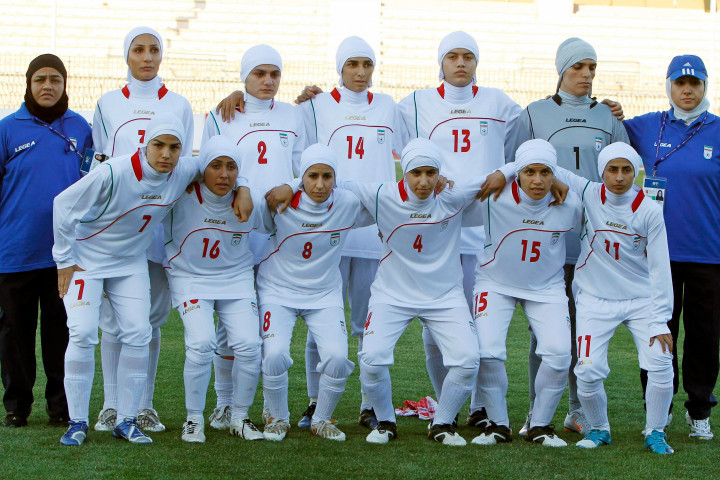
The Arab media is rife with speculation that the eight of the players on Iran’s national women’s soccer team are actually men. In the past Iran has admitted fielding men who had not completed sex change operations. The women’s team plays in hijab headscarves, long-sleeved jerseys and tracksuit pants, so it is not always easy to tell. Video at the top here.
This dispatch concerns Iran. Please “like” these dispatches on Facebook here www.facebook.com/TomGrossMedia, where you can also find other items that are not in these dispatches.
CONTENTS
1. “Desperate to perpetuate the fiction that he has tamed revolutionary Iran”
2. Iranian President’s top aide blames Mossad for planning Mecca stampede
3. “Over 4000” died in the stampede
4. Most players on Iran’s women’s team “are actually men”
5. “Hubris puts Iran in danger” (By Amir Taheri, Asharq Al-Awsat, Oct. 3, 2015)
6. “Iran’s Identity Crisis” (By Kim Ghattas, Foreign Policy, Oct.5, 2015)
[Notes by Tom Gross]
“DESPERATE TO PERPETUATE THE FICTION THAT HE HAS TAMED REVOLUTIONARY IRAN”
There has been a vigorous debate in the U.S. media and Arab world about the Iran nuclear deal, signed by the major world powers, and about America’s perceived (by some) siding with the Shia in their struggle against the Sunni. But there has been remarkably little discussion about it in Europe, considering that it may well be the most important foreign policy decision by the West in recent years, with global ramifications for decades to come.
As about half the subscribers to this list live in Europe, I attach a further piece on the consequences of it, published this past weekend in the leading Arab paper Asharq Al-Awsat and written by the eminent Iranian journalist Amir Taheri. Taheri (who is a long-standing subscriber to this email list) was the editor-in-chief of the Kayhan daily newspaper in Iran for 7 years before the revolution and has won several awards in the West for his work.
Taheri writes in his new piece: “Who was waiting in ambush for whom? … Obama is desperate to perpetuate the fiction that he has tamed revolutionary Iran and, as he claimed the other day, made ‘the world a safer place.’ If the Iran ‘nuclear deal’ is exposed as a sham, which it certainly is, Obama would look like the self-styled wizard in The Wizard of Oz – if not a bad man, at least an incompetent magician.
“For his part, Rouhani … described the ‘deal’ as ‘The greatest diplomatic victory in Islamic history.’(fath al-fotuh). Rouhani has always maintained that the late Ayatollah Khomeini was wrong in helping destroy Jimmy Carter’s presidency. Carter had been sympathetic to the mullahs from the start and had highlighted his readiness for ‘cooperation’ by sending National Security Adviser Zbigniew Brzezinski to meet Khomeini’s Premier Mehdi Bazargan with promises of aid and arms deliveries. Khomeini responded by prolonging the captivity of the US diplomats held hostage in Tehran, wrecking Carter’s chances of reelection.
“Now, perhaps thanks to the Hidden Imam, the U.S. has produced another Carter in the person of Obama, a man who has bent over backwards to make a deal with the Islamic Republic, giving the mullahs a chance of a lifetime to pursue their ambitions unchecked by any major power… Rouhani and Zarif, their egos inflated by the belief that they now have the United States on their side, have made disparaging remarks about several nations.”
After that I attach a piece from Foreign Policy by Kim Ghattas, the BBC’s Lebanese-educated foreign correspondent covering the U.S. State Department.
She writes: “On the flight from Istanbul to Imam Khomeini International Airport, I was struck by how few of the women were veiled. There were barely a handful of scarves amidst the stylish young women in tight jeans and high heels or sneakers and the older women wearing an array of everyday city clothes.
“By the time the plane landed, all the women, myself included, had donned the veil and the manteau, the long-sleeved, knee-length jacket that has been part of the mandatory attire for women in Iran since the revolution. This may seem like a superficial observation based on a scan of people’s appearances, but it’s a reflection of the gulf between the image Iran projects abroad and its diverse identity, the gap between the lives Iranians must lead inside their country and the life many of them would like to have.
“And it’s this tension that Iran will be navigating in the months and years to come after signing a nuclear deal…”
***
Their full pieces are attached below, but first here are three other items:
IRANIAN PRESIDENT’S TOP AIDE BLAMES MOSSAD FOR PLANNING MECCA STAMPEDE
This is the start of a news report yesterday by Iran’s semi-official Fars news agency:
Iranian President’s Aide Blames Mossad for Mina Incident
Tue Oct 06, 2015
http://english.farsnews.com/newstext.aspx?nn=13940714001334
TEHRAN (FNA)- Ali Younesi, a top assistant to the Iranian President and a former Intelligence Minister, said the recent stampede incident in Mina, Saudi Arabia, which killed over 4,000 Muslim pilgrims, was the result of a plot by the Israeli spy agency, Mossad.
“I see the hand of the Zionist regime’s spy agency, Mossad, in the Mina catastrophe,” Younesi said, addressing a forum in the Northwestern city of Tabriz on Tuesday.
He said the “fake Zionist regime” continues its existence through stirring war and violence in the Middle-East, and added, “The ominous regime attempts to stir tension among Islamic nations and make them suspicious of each other.”
“OVER 4000” DIED IN THE STAMPEDE
Tom Gross adds: the Iranian media has been reporting for the past week that over 4,000 Hajj pilgrims were crushed to death in Mina on September 24, and not several hundred as the Saudi government claims.
The claim was made, for example, in this report last week by the Fars news agency: “Supreme Leader Warns of Harsh, Crushing Reaction to Slightest Disrespect for Iranian Pilgrims in S. Arabia”
MOST PLAYERS ON IRAN’S WOMEN’S TEAM “ARE ACTUALLY MEN”
Meanwhile the Arab media has been full of speculation in recent days about whether eight of the players on Iran’s national women’s soccer team are actually men.
The revelation was made by Iranian soccer official Mojtabi Sharifi, according to Britain’s Daily Telegraph and other newspapers.
The women’s team plays in hijab headscarves, long-sleeved jerseys and tracksuit pants, so it is not always easy to tell.
If the new allegations are true, this would not be the first time the team has been involved in a gender scandal.
In 2014, four national team players were found to be either men who had not completed sex change operations or were suffering from sexual development disorders. In 2010, the gender of the team’s goalkeeper was called into question.
Sex change operations have been legal in Iran since 1979, when the late Ayatollah Ruhollah Khomeini issued a fatwa giving them the go-ahead as a way of ensuring there would be no homosexuals in Iran.
ARTICLES
WHO WAS WAITING IN AMBUSH FOR WHOM?
Opinion: Hubris puts Iran in danger
By Amir Taheri
Asharq Al-Awsat
October 3, 2015
http://english.aawsat.com/2015/10/article55345309/opinion-hubris-puts-iran-in-danger
Who was waiting in ambush for whom? For the past few days, the question has been the spice of conversations in political circles in Tehran.
One version, marketed by President Hassan Rouhani’s entourage, is that last Monday U.S.. .President Barack Obama and his Secretary of State John Kerry were lurking in the lobby of the United Nations in New York waiting for Iran’s Foreign Minister Mohammad Javad Zarif to arrive. When the latter did emerge, the two Americans rushed towards him forcing him to shake hands with them. Moments later, the Americans leaked the story, to the chagrin of secretive Iranians.
Another version, marketed by the Iran-lobby in Washington, is that both sides had planned an “accidental meeting” between Obama and Rouhani months ago. It did not happen because Supreme Guide Ali Khamenei vetoed it.
In the end, however, Khamenei agreed that Zarif do the accidental meeting as a gesture to Obama who has worked hard to advance Iranian interests in Washington.
As Majlis member Ali Motahhari put it later, that was no big deal. Zarif had shaken many hands at the UN, including that of the janitors. Giving Obama a handshake was a small recognition of his brave fight against the US Congress on behalf of Iran.
There is little doubt that both sides wanted the “accidental” encounter to demonstrate their chumminess.
Obama is desperate to perpetuate the fiction that he has tamed revolutionary Iran and, as he claimed the other day, made “the world a safer place.”
If the Iran “nuclear deal” is exposed as a sham, which it certainly is, Obama would look like the self-styled wizard in The Wizard of Oz – if not a bad man, at least an incompetent magician.
For his part, Rouhani must salvage whatever he can of the “nuclear deal” which he has always presented as the crucial step towards normalization with the “outside world” which every Iranian understands to mean the United States.
He has described the “deal” as “The greatest diplomatic victory in Islamic history.” (fath al-fotuh).
Rouhani has always maintained that the late Ayatollah Khomeini was wrong in helping destroy Jimmy Carter’s presidency.
Carter had been sympathetic to the mullahs from the start and had highlighted his readiness for “cooperation” by sending National Security Adviser Zbigniew Brzezinski to meet Khomeini’s Premier Mehdi Bazargan with promises of aid and arms deliveries. Khomeini responded by prolonging the captivity of the US diplomats held hostage in Tehran, wrecking Carter’s chances of reelection.
Now, perhaps thanks to the Hidden Imam, the US has produced another Carter in the person of Obama, a man who has bent over backwards to make a deal with the Islamic Republic, giving the mullahs a chance of a lifetime to pursue their ambitions unchecked by any major power.
With Obama’s support, Rouhani hopes to reenergize Iran’s moribund economy, consolidate the Rafsanjani faction’s positions internally and, hopefully, capture the Islamic Majlis and the Assembly of Experts in next spring’s elections.
This is how Sadegh Zibakalam, one of Rouhani’s intellectual advisors puts it: “Fortunately, Mr. Rouhani does not think that the Western Civilization is headed for decline and fall. He doesn’t want to export revolution, nor does he believe that the future of mankind depends on Iranian or Islamic civilization. He doesn’t regard the denial of the Holocaust as a historic mission for Islamic Iran. Not only has he waved the olive branch to America but, since his election two years ago, he has not even once called for the destruction of Israel.”
Zibakalam’s comment on Rouhani’s approach to the “Israel question” comes in the wake of reports that a former Islamic Republic minister who served under former presidents Hashemi Rafsanjani and Muhammad Khatami has met two Israeli representatives in Cyprus for “exploratory talks.”
The problem is that chumminess with the US may be leading Rouhani and his faction, led by Rafsanjani, into a fantasy world fueled by hubris. They now behave as if they are the anointed “regional superpower” backed by Obama.
Signs of hubris are already there.
Rouhani and Zarif, their egos inflated by the belief that they now have the United Sates on their side, have made disparaging remarks about several nations.
Rouhani has boasted that Iraq was saved from the Islamic State of Iraq and Syria (ISIS) thanks to Iranian military support.
“If our armed forces were not there, Da’esh would have already been in Baghdad,” he claimed, using the Arabic acronym for the group. “It was us who saved Samarra and Baghdad and drove Da’esh away from Karbala.”
Leaving aside that ISIS was never close to Karbala and that Iran had nothing to do with the defense of Samarra or Baghdad, Rouhani forgets that Iraq, a nation of 30 million, might resent being insulted by a foreign mullah.
Rouhani mocks Iraq as “a place once regarded as the most powerful Arab state.” “Now look at it, “he says. “Look at its pitiful state!”
Rouhani also claims that Iranian forces saved Syria. He forgets that Syria is far from saved; in fact it is ravaged partly because of Iranian support for Bashar Al-Assad.
Drunk on hubris prompted by the illusion of American support, Rouhani even offers to send Iranian troops to “protect Mecca and Medina” as if the Saudi government and nation did not exist.
His politicization of the Hajj tragedy may have been inspired by a desire to counterbalance his growing dependence on Washington by appearing more “revolutionary” than Khamenei.
In any case, Rouhani’s statement was a mistake, angering even Shi’ite leadership in Najaf.
Even Turkey is not spared. Rouhani’s government has closed frontiers and advised Iranians not to travel to Turkey because of “violence and instability” there.
“Iran is the only island of stability in the region,” Rouhani boasted in meeting with Austrian President Heinz Fischer.
Rouhani is not alone in being afflicted by hubris. His adviser Ayatollah Ali Yunesi claims that for the first time since the Arab Invasion, Bagdad is “back in Iranian orbit”.
Former Foreign Minister Ali-Akbar Velayati asserts that Tehran “shall under no circumstances allow Bashar Al-Assad to fall,” as if the Syrian were an employee of the Islamic Republic and as if the Syrian people had no say in who they want as their president.
Velyatai also says that former Egyptian President Mohamed Mursi fell because “he didn’t listen to our Supreme Guide” who had advised the Muslim Brotherhood to “purge the Egyptian army and create a new force modelled on the Islamic Revolutionary Guard.”
Rafsanjani goes further, claiming that “those who govern Iraq are our people.” He specifically names former Iraqi President Jalal Talabani as “one who always worked for us.”
Ayatollah Javadi Amoli uses word play to mock Iraq. “Iraq has become owraq,” he chuckles. (owraq means shattered Persian.)
Zarif dismisses Pakistan as “irrelevant, in spite of its nuclear arsenal.”
The party of hubris also mocks the diplomats and businessmen from Europe and elsewhere coming to Tehran as “supplicants paying tribute to the power of Islamic Iran.”
The image reminds Iranians of stone-carvings in Persepolis depicting envoys of subject-nations coming to kiss the feet of the Persian King of Kings.
The fact is that Europeans and others are coming to secure contracts in case Iran regains control of its oil revenues, something that is far from certain.
Rouhani’s presidency started with a series of bluffs. Thanks to Obama’s weird behavior, a layer of hubris has been added to the sediment of those bluffs.
For reasons hard to fathom, Rouhani likes to present himself as “moderate”.
To live up to that claim he should start by moderating his language and the language of his associates.
Hubris is a sin and pride is a prelude to fall.
IRAN’S IDENTITY CRISIS
Iran’s Identity Crisis
By Kim Ghattas
Foreign Policy
October 5, 2015
On the flight from Istanbul to Imam Khomeini International Airport, I was struck by how few of the women were veiled. There were barely a handful of scarves amidst the stylish young women in tight jeans and high heels or sneakers and the older women wearing an array of everyday city clothes.
By the time the plane landed, all the women, myself included, had donned the veil and the manteau, the long-sleeved, knee-length jacket that has been part of the mandatory attire for women in Iran since the revolution. This may seem like a superficial observation based on a scan of people’s appearances, but it’s a reflection of the gulf between the image Iran projects abroad and its diverse identity, the gap between the lives Iranians must lead inside their country and the life many of them would like to have.
And it’s this tension that Iran will be navigating in the months and years to come after signing a nuclear deal with six world powers to curb its nuclear program in exchange for lifting crippling sanctions. For millions of Iranians, this is a once-in-a-generation opportunity to reconnect with the world, and their eagerness to forge a different path forward may collide with the reluctance of their most conservative leaders.
Since the agreement was reached in July, both Tehran and Washington have been at pains to clamor that the document does nothing more than what it outlines. They’re both wrong, in the short term and long term, when it comes to the regional impact, the internal evolution of Iran, and the relationship between the two countries.
For now, the country’s supreme leader, Ayatollah Ali Khamenei, has been incessantly repeating that Iran will continue to counter U.S. influence in the region at every turn. No surprise there. But more interestingly last week he tweeted that the “[enemy’s] infiltration today is a great threat to Iran. Economic, security infiltration is less vital than mental, cultural & political ones” and that “[enemies] promise that #Iran will be totally different in 10 years; we must not allow such evil prospects and thoughts [to take] shape in enemy’s mind.”
That’s the real concern: how to let the outside world in without undermining a system underpinned by the strictures of an Islamic theocracy.
In August, I traveled to Iran for the first time, on a weeklong assignment for the BBC, the longest the organization has been allowed to report from inside the country since 2009. Access to Iran for Western media is tightly controlled by the authorities, and visas are doled out carefully. There are only a couple of Western reporters based in Tehran full time; most media organizations rely on Iranians or dual Iranian citizens. One of them, the Washington Post’s Jason Rezaian, has spent the last 14 months in jail facing charges of spying.
I have spent most of my career reporting on the Arab world, and, of course, Iran’s influence in countries like Lebanon or Iraq is part of the beat. I know Iran’s politics and post-revolutionary Islamic culture through my encounters with Lebanon’s Hezbollah militant group, Iran’s first revolutionary export, which keeps a tight lid on the Shiite community and exercises outsize control over Lebanon’s fate.
And I know it through my Iranian friends in the United States and the U.K., through authors and journalists, doctors, poets, and patisserie chefs – exiles of the revolution who feel they still represent today’s Iran: secular, liberal, and modern. But after three decades of life in a theocracy, how much had Iranians living inside the country internalized its values? And between the chador-clad women in the southern suburbs of Beirut or the hyper-modern Iranians in exile, which were the most representative of what Iran stood for today?
Those two disparate worlds come together on the streets of Tehran, coexisting awkwardly, often clashing. One evening, I attended a pop concert by beloved Iranian singer Mehdi Ahmadvand. The crowd at the Milad Hall was mixed – young and old, men and women, but everyone went wild when the band, all male, showed up on stage, with the singer, Ahmadvand, wearing an all-red suit. Hanging on the wall was a picture of the Ayatollah Khamenei looking down on the crowd. There was no dancing.
When I traveled to Saudi Arabia in April, I was chased down the walkway of a shopping mall by the mutawe’en, the religious police, for not properly covering my hair. I had never encountered them on my half a dozen trips to the kingdom before, but since King Salman’s accession to power in January, he has encouraged their resurgence.
Eager not to attract undue attention on my first visit to Tehran, I was careful to follow the rules down to the last inch of clothing – sleeves to the wrist, dress down to the knees worn over trousers, tightly wrapped veil, closed shoes, and no nail polish. I often ended up feeling like a conservative peasant amidst the women in fashionable manteaus left open and veils so far back on the head that they looked more like a 1960s fashion accessory.
Under President Mahmoud Ahmadinejad, the religious police were out in force, even fining women for each painted fingernail. Men with long hair or sporting bracelets were also targets. But after he was elected in 2013, President Hassan Rouhani promised to rein in the morality police, and their presence has become much less noticeable, though they are still there in the shadows. But now they can also be the butt of jokes.
At the Parsi movie theater, I sat in on Nahang-e Anbar, a comedy about life and love through the years since the revolution. A turbaned cleric showed up on the screen to the theme song of Mission: Impossible, walking down the street in slow motion with his bodyguards pushing people out of the way, sending the pomegranates of a fruit vendor rolling over the sidewalk. Irreverence toward the clergy is unlikely in most other Muslim countries.
In another scene, the morality police detain young Iranians for inappropriate dress. One officer pushes them into a van, but another officer lets them out through the other door, with a pat on the back and advice to shorten their hair for the men or find some nail polish remover for the women. The audience laughed heartily.
For a country that has been under layers of sanctions since 1979, Iran, or at least Tehran, feels less isolated, more modern than Iraq under Saddam Hussein. On my visits there before the 2003 fall of Baghdad, the decay under the embargo and the burden of life under the most ruthless dictatorship in the region were blatantly obvious. You couldn’t even fly to Iraq, so traveling there involved a mind-numbing 12-hour drive through the desert from Jordan; it was a trip back to the 1970s, a drab city with poor infrastructure, open sewers in some parts, and a people often too afraid to even speak out the names of Saddam’s two ruthless sons, Uday and Qusay.
I know Iranians have been crushed by sanctions, their spending power slashed and their thirst for innovation blunted, but their capital reminded me of Istanbul: mostly low-rise buildings, bustling and very pedestrian, but built on the side of a mountain, at more than 3,000 feet in altitude. Surprisingly green, dotted with gardens and parks, and trees lining the streets, its notorious traffic jams were even worse than I expected. The ski slopes are only 20 minutes away, and, in the summer, young Iranians take to the hills for paragliding, hiking, or motorbike obstacle racing.
Our tight schedule didn’t allow time for a visit to the more conservative working-class areas in the southern part of the city where long manteaus, tight veils, and full-on Iranian black chador are widespread. But for the only theocracy in the region, Iran seems much less overtly concerned with religion than its Sunni neighbors and the only country in the Middle East where people are more secular than their government.
Five days into my stay, I suddenly realized something was missing: the call to prayer. It echoes through all Arab cities from Rabat to Riyadh, at varying decibels, punctuating life five times a day. In Saudi Arabia, shops shut down for every daytime prayer. If Iranians are devout, it’s very much a private affair. In Tehran, you hear the call to prayer once a week, on Friday at noon, and prayers are held at one central location: Tehran University. What happens in the other mosques across the city, I asked the translator? “Nothing.”
Tehran University is where the revolution is kept alive, where A-list fiery clerics give their sermons, and where the supreme leader himself will make appearances and speak to the faithful. Across the country, in every town and city, prayers are held in one designated mosque, where the official message is delivered.
With politics so inherently tied to the duty of prayer, showing up at the mosque is seen as an endorsement of the regime – another possible explanation for why mosque attendance is so low in Iran. In Tehran, a city of 12 million, there are only roughly 10,000 loyalists who show up on Friday. Everyone else seems to be out at lunch judging from the waiting lines at the restaurant I went to that day a short drive away from the university.
But it’s at Tehran University that you find the voices supporting Iran’s role in Syria, Iraq, and Yemen.
“Syria’s President Assad was our ally and supported Iran during the war with Iraq,” a retired government employee told me. “And Hezbollah, who is [fighting] against Israel, is also our friend. Our policy for the time being is to protect and support these two allies, especially Syria.”
But Iran needs the money being spent to support Syria, I pressed. “Yes, of course, our country needs it even more, but they also need us,” he said. “This is not just foreign policy, but it is also our religious duty to protect the oppressed wherever they might be.”
And, yes, it’s here that the faithful chant “Marg Bar Amrika” – “Death to America” – a somewhat tired ritual. Instead, today it seems that Iranians, certainly those who are conservative and who follow politics, are a lot more preoccupied with enmity toward one neighbor.
Every conversation I had that touched on Iran’s regional role immediately brought fierce, derogatory comments about Saudi Arabia. Outside Friday prayers, I spoke to conservative cleric Sheikh Mohsen Mahmoudi. When I asked him how Tehran and Riyadh could overcome current tensions between them, he just said, “Saudi Arabia is not a democratic state because it has no elections,” as though it meant Iran didn’t have to stoop so low as to think about how to deal with Riyadh.
“I think that Americans have also reached the conclusion that this government has got to go. They do not enjoy any type of elections, have no parliament, [and] women cannot drive or have any rights of participation.”
Iran, on the other hand, had a “greatness that lies in our 7000-year civilization, cultural discourse, and cultural impact,” he said.
Hossein Sheikholeslam, Iran’s deputy speaker and former ambassador to Damascus, also told me in an interview on the same trip that Saudi Arabia’s sphere of influence was diminishing and the Saudis were worried their system would collapse, in part because of its “lack of democracy.”
Everything is relative of course: From dissidents jailed and harassed to a staggering wave of executions without due process, Iran’s own record is far from pristine – but it does have elections and women do serve in high office. To its credit, Iran is also the only country in the region where the leadership seems to have understood a lesson that Arab leaders have ignored with devastating consequences.
When Iran’s uprising warning came in 2009, and hundreds of thousands of Iranians took to the streets to protest Ahmadinejad’s contested reelection, the demonstrations were violently repressed; prominent leaders of the Green Movement, including Ahmadinejad’s opponent, Mir Hossein Mousavi, still remain under house arrest. But the events shook the leadership and awoke everyone to the dangers of having the whole system brought down by unrest. When ordinary Iranians look to Syria, or Libya further away, they see the outcome of a civil protest movement against leaders that refuse to leave power and have nowhere else to go. When Iran’s leaders look at those countries, they are reminded of the dangers of refusing even a modicum of change and openness.
Saeed Leylaz, an economist who spent a year in jail in 2009 for criticizing the contested election of Ahmadinejad, told me that this lesson was imparted to Iranians not only as a result of the Arab uprisings but from their own revolution three decades ago.
“We learnt if we want to change, it should be as slow as possible but as deep as possible. Hard changes are not good for the country. Because of changes in Iraq, for example, there is no middle class in Iraq, no teachers in university – they killed everybody,” said Leylaz.
“We should go ahead as slow as possible, as deep as possible, and we should convince each other that the change is compulsory,” he added, saying he hoped everyone would move to the middle of the political spectrum.
So this is the gamble that Iran’s leadership took when it decided to go ahead with the nuclear negotiations: to offer hope and the prospect of economic prosperity so it can keep Iran’s restless youth on board, in a country where more than 60 percent of the population is under 30 years old. More crucially, it coincided with the interests of the Islamic Revolutionary Guard Corps, the most powerful branch of Iran’s military, which also presides over lucrative businesses and was feeling the bite of sanctions.
If Iran has learned the hard way that violent change can take the country into volatile directions, this is also a country that has a surprising ability to reflect on the past and preserve it.
On one of my last days in Tehran, I visited the Niavaran palace complex, a 97,000-square-foot estate with gardens, tennis courts, and several palaces, including Shah Mohammed Reza Pahlavi’s last residence until he was forced out of power and left Iran with his wife, Farah Diba, in January 1979.
Much was burned down in Tehran in those turbulent months, including banks, cinemas, and private residences. But the palace, which should have attracted the ire of the protestors and been ransacked, was somehow preserved. The queen’s delicate silk embroidered dresses are on display in the Blue Hall; the dining room is set for 24 guests; a portrait of the shah and his family is on the wall. In the private quarters, the beds are made, the shah’s military jacket is on display, and in the children’s bathroom a sticker of Tweety Bird has survived the decades.
Today, the museum is meant to be a reminder of the shah’s excesses and disregard for his people, but it stands as an odd testament to a lost era and ode to Iran’s rich heritage. Time has stood still for Iran in many ways since the day the shah made his exit and the country entered into isolation. Despite the new cars, the sprinkling of Western shops, Tehran feels in a bit of a time warp, reminiscent of Turkey in the early 1990s, its bottled-up entrepreneurial spirit ready to emerge.
But the battle to set the tone for the future of Iran is now getting under way. A tussle for influence between hard-liners and reformers, ahead of key elections next year, highlights an internal dynamic that the United States and the outside world must be attuned to.

[Note by Tom Gross]
In 2013 and 2014, in a series of dispatches I published exclusive photos (one of which is above) of student rallies held on the main campus at Jerusalem’s Al-Quds University, which was partnered with America’s Brandeis University and Bard College.
At those rallies (which were held with the permission of the university authorities) the students were urged to kill Jews.
It seems the rhetoric at such rallies has all-too-real consequences.

The perpetrator of last night’s grisly attack on four Jews (including a baby) in the Old City of Jerusalem, Mohanned Halabi, 19, (above, in Islamic Jihad headband) was a second-year law student at Al-Quds University, and multiple sources at Al-Quds University confirm to me this morning that he was a member of the same Islamic Jihad student group there that was featured in the rallies I wrote about.
The then president of Brandeis university, who is a subscriber to this list, decided to suspend the relationship with Al-Quds as a result of these dispatches; but last year two leaders of J Street’s campus group, J Street U, were given a grant to travel to Al-Quds and spearhead a “student dialogue initiative” aimed at repairing relations between Al-Quds and Brandeis.
Despite the fact that the Islamic Jihad and Hamas student factions continue to operate and indoctrinate students with the permission of the university authorities, Al-Quds continues to receive American and European taxpayers money.
BBC TURNS TERRORIST INTO VICTIM
The publicly-funded BBC, which refused to call Thursday’s (previous) terrorist murders of two Israeli parents in front of their four children terror attacks, yesterday strained the English language to imply that Israel shot dead a Palestinian (the above-mentioned Mohanned Halabi) for no reason -- without explaining he had already murdered two Jews and badly injured a Jewish woman and stabbed a 2 year child and was in the process of trying to murder more Jews when he was stopped.
The BBC website headline was:

The above headline was later changed after members of the public swamped the BBC switchboard to complain of what one British activist group called “the BBC’s despicable anti-Semitic and racist lies”.
Other news organizations I have seen in Europe and America reported these murders in a straightforward way, for example, NBC news: “Two Israelis killed, teen and baby stabbed in attacks in Jerusalem”. But not the BBC, which reverses for Israelis (and only Israelis) the perpetrator and victim.
The BBC also failed to mention that Thursday’s double murders of the Israeli parents were claimed by Palestinian President Mahmoud Abbas’s Fatah faction.
***
UPDATE: LE FIGARO
A French reader points out to me that the online headline in Le Figaro was just as misleading. He sent me a screenshot which reads (in translation) “3 dead in an attack in Jerusalem including a Palestinian.”
***
UPDATE: AL JAZEERA APOLOGIZES; BBC REFUSES TO
Credit to Al Jazeera for admitting its mistake for the way it initially reported last night’s deadly terror attack in Jerusalem. My sources at the BBC say the BBC will not apologize for their misreporting, which was worse than that by Al-Jazeera.
“Al Jazeera regrets the wording of a tweet we posted regarding an attack in Jerusalem this weekend.”
http://www.aljazeera.com/news/2015/10/editor-note-clarifying-tweet-jerusalem-attack-151004093616664.html
THOUSANDS ‘LIKE’ FACEBOOK PAGE HONORING JERUSALEM TERRORIST
A Facebook page set up in honor of terrorist Mohanned Halabi had by early this morning already gained more than 2,000 “likes” according to news reports in the Middle East.
I am choosing not to link to it, though I have viewed it.
Many question why Mark Zuckerberg, the CEO of Facebook, continues to allow anti-Semitic incitement to kill on Facebook.
***
In another attack last night, an Arab driver rammed his car in into a 9-year-old Jewish boy on the West Bank, injuring him.
Hamas leader Ismael Radwan called the spate of attacks on defenseless Jewish civilians during the Jewish holiday of Sukkot “heroic”.
There are previous dispatches on this story here:
* Scenes yesterday afternoon from a “moderate” Palestinian university
* Al-Quds: Fascist-style rally by our students last Tuesday was “totally unacceptable”
* Update: Al-Quds photos receive attention from Netanyahu through to Al Jazeera
* Brandeis suspends partnership with Al-Quds after (they appear to defend) Fascist-style rally
* Finally, the New York Times covers official Palestinian Authority praise for Hitler
UPDATES:
See the note in this dispatch: * Students honor a murderer / An email to Bard
See also this dispatch from April 2, 2017:
* Yet more incitement to kill Jews at a “moderate” American-partnered university
* Please “like” these dispatches on Facebook here www.facebook.com/TomGrossMedia, where you can also find other items that are not in these dispatches.
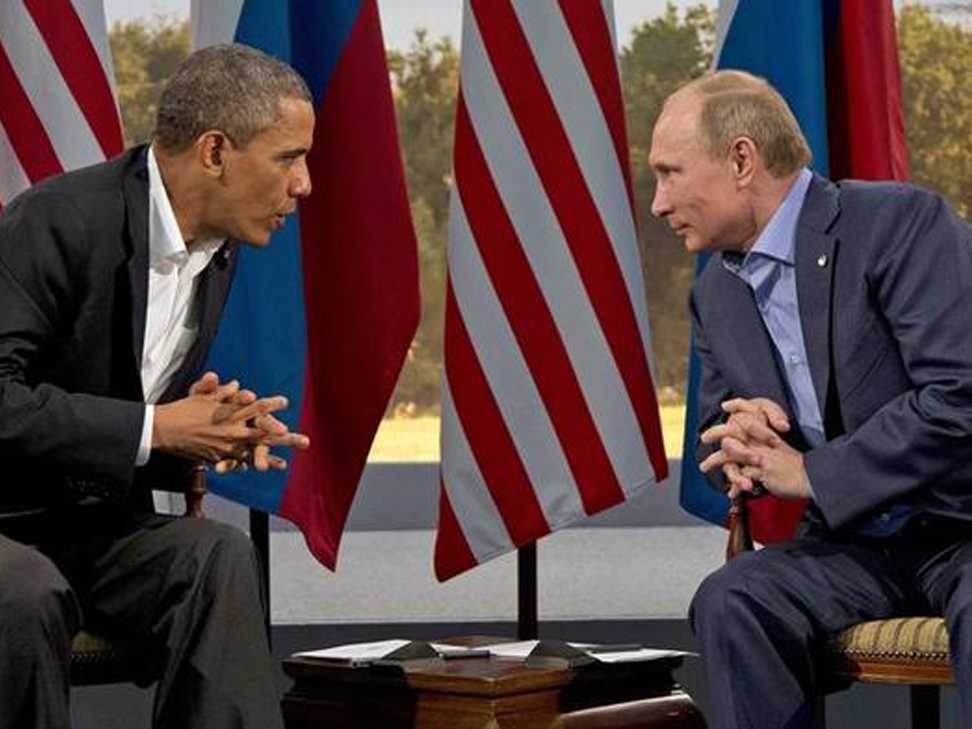
[Note by Tom Gross]
I attach six articles on the situation in Syria, with some short extracts first, for those who don’t have time to read them in full.
On a personal note, I would like to add once again that it is ludicrous to think that Assad – who is committing a fast-moving ethnic cleansing (and, in some senses, a slow-motion genocide) against the Sunni majority population of Syria – is the solution to the Syrian quagmire any more than the equally despicable Isis is.
Both have to be removed for peace to be restored to Syria and to the wider region.
EXTRACTS
* Reuters: “Hundreds of Iranian troops have arrived in Syria to join a major ground offensive in support of President Bashar al-Assad’s government [In fact, as documented several times in these dispatches, Iranian revolutionary guards have been present on the ground in Syria for at least three years -- TG.] Meanwhile Russian warplanes bombed a camp run by rebels trained by the U.S. Central Intelligence Agency.”
* John Mclaughlin (acting director and deputy director of the CIA from 2000 to 2004): “Nature abhors a vacuum, but Vladimir Putin really loves one. The Russian president clearly sensed a big power void in Syria, where the civil war has intensified and where the United States has neither committed ground forces nor devised a compelling strategy to settle the conflict or defeat the Islamic State… What to make of Russia’s muscling into the war-torn country? For Putin, there are essentially five reasons, moving from the broadly strategic to the purely tactical…”
* Israeli counter-terrorism expert Ely Karmon: “Russian Air Strikes in Syria Aim to build an Alawite Mini-state for Assad, and transform it into a solid strategic base in the region under Russia’s umbrella. Putin’s military intervention does not target ISIS, but seeks to establish a solid strategic base for Russia in the Middle East. As Russia forges an alliance with Iran and Iraq, Israel’s interests will be put at stake.”
* Ralph Peters: “Putin wants to humiliate Obama with airstrikes in Syria. The first thing to understand about Vladimir Putin is that he’s not content just to win. He has to destroy his opponents, foreign or domestic. His deeds may be despicable and his manners far too crude for the Upper West Side, but the guy is a force of nature, a man who – by sheer strength of will – has used a broken country and its rusting military to change the world. Meanwhile, our astonished president sulks like a high-school girl stood up by her boyfriend (‘But Vladimir . . . you promised!’).
“Now we have reached the point where a Russian general can barge into a US military office in the Middle East and order us to stop flying our aircraft over Syria. Oh, we’re still flying, for now – but you can bet that our flights are restricted and careful to the point of paralysis… Never before has a US presidential administration combined such naked cowardice, intellectual arrogance and willful blindness. We don’t have a president – we have a scared child covering his eyes at a horror movie. And Putin knows it.”
* French expert Olivier Guitta: “Assad recently said: ‘My goal has never been to remain president, neither before, during, or after the crisis.’ Facts sadly prove the opposite each day. Assad has an amazing track record of always saving himself or being saved at the last minute, waiting for the storm to pass.
“It all started ten years ago when Lebanese billionaire and former Prime Minister Rafik al-Hariri was murdered in a spectacular terror attack in Beirut. Right away all signs pointed to Damascus’ involvement in the attack … but then in 2008 when French president Nicolas Sarkozy made him his guest of honor at the Bastille Day parade in Paris… History should have taught the international community that engaging a regime like Assad’s rarely works; on the contrary it actually emboldens it.”
* Please “like” these dispatches on Facebook here www.facebook.com/TomGrossMedia, where you can also find other items that are not in these dispatches.
CONTENTS
1. “The great game comes to Syria” (By John Mclaughlin, ozy.com, Sept 28, 2015)
2. “Iran troops to join Syria war, Russia bombs group trained by CIA” (Reuters, Oct 1, 2015)
3. “Russian airstrikes in Syria aim to build Alawite mini-state for Assad” (By Ely Karmon, Haaretz, Oct 1, 2015)
4. “Putin wants to humiliate Obama with airstrikes in Syria” (By Ralph Peters, New York Post, Sept 30, 2015)
5. “Assad wins... again. How Syria’s president outfoxed the West” (By Olivier Guitta, FoxNews.com, Sept 28, 2015)
6. “Five ISIS weapons of war Russia should fear in Syria” (By Robert Farley, The National Interest, Oct 1, 2015)
ARTICLES
THE GREAT GAME COMES TO SYRIA
The great game comes to Syria
By John Mclaughlin
Sept 28, 2015
www.ozy.com/pov/the-great-game-comes-to-syria/64940
Nature abhors a vacuum, but Vladimir Putin really loves one. The Russian president clearly sensed a big power void in Syria, where the civil war has intensified and where the United States has neither committed ground forces nor devised a compelling strategy to settle the conflict or defeat the Islamic State. Although the Islamic State has rampaged through Iraq, its headquarters is in Syria.
Into that vacuum, Putin has sent a substantial force of tanks, armored personnel carriers, air defense systems and upward of two dozen combat aircraft over the past several weeks. Russia is also building enough housing for 2,000 people, U.S. officials have said. What to make of Russia’s muscling into the war-torn country? For Putin, there are essentially five reasons, moving from the broadly strategic to the purely tactical.
MAKING RUSSIA A GREAT POWER AGAIN. Gaining a pivotal role in the Middle East would be an important way station on the road to Putin’s overarching goal – restoring Russia to great-power status. The Syria problem allows him to vividly contrast Russia’s activism with what many see as Washington’s hesitation and timidity. Count on Putin to present himself as the regional peacemaker when he speaks at the U.N. today.
SHORING UP ASSAD … OR HIS SUCCESSOR. The Syrian president, Bashar al-Assad, has been Russia’s only real ally in the region; Syria hosts Russia’s sole warm-water seaport at Tarsus. But Assad is weakening, particularly under assaults from the Islamic State, and now controls only about a sixth of the country. By establishing a ground presence, Russia hopes not only to increase Assad’s chances of surviving but also – equally important – to be in a position to influence the succession if he does not. More on this in a minute.
This clear Russian interest contrasts with the more complex calculus the U.S. has faced. By virtue of opposing both Assad and the Islamic State, Washington has been paralyzed by the simple reality that opposing one of them inevitably helps the other. The U.S. has yet to devise a strategy that avoids this Hobson’s choice.
REGIONAL INFLUENCE. Military intervention gives the Russians an opportunity to tighten relations with Iran, which shares Russia’s desire to prop up the Assad regime. Already Iran has military advisers and proxy forces – Hezbollah militia fighters from Lebanon – on the ground in Syria. Not that Putin is depending solely on Iran: Russia has played regional power broker for months in the run-up to the Syria deployment, hosting consultations in Moscow with leaders from Saudi Arabia, Jordan, Egypt, Turkey, Israel, Palestine and Iran.
HAMMERING ON THE ISLAMIC STATE. Putin genuinely wants to defeat the Islamic State. Russia says about 2,400 of its nationals are fighting with the IS; chances are, many of them are from Russia’s Caucasus region, which has a large Muslim population and hosts a number of separatist movements. Returning Russian fighters would pose a direct threat to Russia’s control in key parts of its southwest.
WHEN IN DOUBT, DISTRACT. Activism in Syria gives Putin a way to distract attention from Russia’s aggression in Ukraine. At the same time, it obliges the Western coalition opposing the Islamic State to work directly with Russia. At minimum, the U.S.-led coalition has to de-conflict military operations with Russia, but inevitably, that will begin to draw it into a cooperative relationship with Moscow. That will only muddy the waters when it comes to the West’s Ukraine grievances.
***
Although Russia’s broad objectives are clear, its precise plans in Syria are not. Its major fear is probably that the Assad regime will fall to some combination of extremists dominated by the Islamic State, thus depriving Moscow of its closest ally in the region. Faced with that fear, Russia could pursue one of two paths. Together with Iran, it could go all out to preserve Assad in power, concentrating its firepower on the Islamic State – and perhaps even on the more moderate rebels the West tends to favor.
On the other hand, Russia may have concluded that Assad’s crumbled legitimacy – due to the horrors his regime has inflicted on his own people – makes it unrealistic to preserve the regime in its present form. It may thus settle on a more modest objective: Prevent a total breakdown of order by preserving the rough form of the Syrian state while easing Assad out gradually in favor of some other, more acceptable ruler. The latter scenario is not far off from what the United States and the United Nations have been trying unsuccessfully to achieve in Syria. So if events move in that direction, there could be scope for cooperation between Russia and the West on a phased strategy, working first to destroy the Islamic State and then deciding what to do about the Assad regime.
In the end, the main thing Russia gains from its deployment is enhanced leverage over what becomes of Syria. At the same time, the limitation of U.S. efforts to an air campaign and the failure of its program to train a large force of moderate rebel fighters mean that the U.S. has lost leverage and will have less influence over the course of events in Syria. In short, Putin is forcing the U.S. to work with him and ensuring that he will have a large voice in determining the future of the Middle Eastern capital that means the most to Russia.
Overall, not a bad day’s work for Mr. Putin.
(The author was acting director and deputy director of the CIA from 2000 to 2004 and now teaches at the Johns Hopkins School of Advanced International Studies.)
IRAN TROOPS TO JOIN SYRIA WAR, RUSSIA BOMBS GROUP TRAINED BY CIA
Iran troops to join Syria war, Russia bombs group trained by CIA
By Laila Bassam and Andrew Osborn
Reuters
October 1, 2015
BEIRUT/MOSCOW (Reuters) - Hundreds of Iranian troops have arrived in Syria to join a major ground offensive in support of President Bashar al-Assad’s government, Lebanese sources said on Thursday, a sign the civil war is turning still more regional and global in scope.
Russian warplanes, in a second day of strikes, bombed a camp run by rebels trained by the U.S. Central Intelligence Agency, the group’s commander said, putting Moscow and Washington on opposing sides in a Middle East conflict for the first time since the Cold War.
Senior U.S. and Russian officials spoke for just over an hour by secure video conference on Thursday, focusing on ways to keep air crews safe, the Pentagon said, as the two militaries carry out parallel campaigns with competing objectives.
“We made crystal clear that, at a minimum, the priority here should be the safe operation of the air crews over Syria,” Pentagon spokesman Peter Cook said.
Two Lebanese sources told Reuters hundreds of Iranian troops had reached Syria in the past 10 days with weapons to mount a major ground offensive. They would also be backed by Assad’s Lebanese Hezbollah allies and by Shi’ite militia fighters from Iraq, while Russia would provide air support.
“The vanguard of Iranian ground forces began arriving in Syria -soldiers and officers specifically to participate in this battle. They are not advisers ... we mean hundreds with equipment and weapons. They will be followed by more,” one of the sources said.
So far, direct Iranian military support for Assad has come mostly in the form of military advisers. Iran has also mobilized Shi’ite militia fighters, including Iraqis and some Afghans, to fight alongside Syrian government forces.
Moscow said it had hit Islamic State positions, but the areas it struck near the cities of Hama and Homs are mostly held by a rival insurgent alliance, which unlike Islamic State is supported by U.S. allies including Arab states and Turkey.
Hassan Haj Ali, head of the Liwa Suqour al-Jabal rebel group that is part of the Free Syrian Army, told Reuters one of the targets was his group’s base in Idlib province, struck by about 20 missiles in two separate raids. His fighters had been trained by the CIA in Qatar and Saudi Arabia, part of a program Washington says is aimed at supporting groups that oppose both Islamic State and Assad.
“Russia is challenging everyone and saying there is no alternative to Bashar,” Haj Ali said. He said the Russian jets had been identified by members of his group who once served as Syrian air force pilots.
The group is one of at least three foreign-backed FSA rebel factions to say they had been hit by the Russians in the last two days.
At the United Nations, Russian Foreign Minister Sergei Lavrov told a news conference Moscow was targeting Islamic State. He did not specifically deny that Russian planes had attacked Free Syrian Army facilities but said Russia did not view it as a terrorist group and viewed it as part of a political solution in Syria.
The aim is to help the Syrian armed forces “in their weak spots”, said Kremlin spokesman Dmitry Peskov.
Pentagon spokesman Peter Cook described Thursday’s military talks as “cordial and professional.” During the talks, Elissa Slotkin, an acting assistant U.S. secretary of defense, “noted U.S. concern that areas targeted by Russia so far were not ISIL strongholds.” Cook said, using an acronym for Islamic State.
The Pentagon said it would not share U.S. intelligence with Russia and suggested the talks included ideas to increase safety, such as agreeing on radio frequencies for distress calls and a common language for communications.
U.S. Republican Senator John McCain, chairman of the Senate Armed Services Committee, and a frequent Obama critic, questioned the logic of talks on how to keep U.S. and Russian militaries apart, known in military parlance as “deconfliction.”
“Unfortunately, it appears ‘deconfliction’ is merely an Orwellian euphemism for this administration’s acceptance of Russia’s expanded role in Syria, and as a consequence, for Assad’s continued brutalization of the Syrian people,” McCain said.
SAME ENEMIES, DIFFERENT FRIENDS
Russia’s decision to join the war with air strikes on behalf of Assad, as well as the increased military involvement of Iran, could mark a turning point in a conflict that has drawn in most of the world’s military powers.
With the United States leading an alliance waging its own air war against Islamic State, the Cold War superpower foes, Washington and Moscow, are now engaged in combat over the same country for the first time since World War Two.
They say they have the same enemies - the Islamic State group of Sunni Muslim militants who have proclaimed a caliphate across eastern Syria and northern Iraq.
But they also have different friends, and sharply opposing views of how to resolve the 4-year-old Syrian civil war, which has killed more than 250,000 people and driven more than 10 million from their homes.
Washington and its allies oppose both Islamic State and Assad, believing he must leave power in any peace settlement.
Washington says a central part of its strategy is building “moderate” insurgents to fight Islamic State, although so far it has struggled to find many fighters to accept its training.
Moscow supports the Syrian president and believes his government should be the centerpiece of international efforts to fight the extremist groups.
It appears to be using the common campaign against Islamic State as a pretext to strike against groups supported by Washington and its allies, as a way of defending a Damascus government with which Moscow has been allied since the Cold War.
The Russian strikes represent a bold move by President Vladimir Putin to assert influence beyond his own neighborhood. It is the first time Moscow has ordered its forces into combat outside the frontiers of the former Soviet Union since its disastrous Afghanistan campaign in the 1980s.
The Russian and Iranian interventions in support of Assad come at a time when momentum in the conflict had swung against his government and seem aimed at reversing insurgent gains.
Prime Minister Haidar al-Abadi of neighboring Iraq, where Washington is also leading an air war against Islamic State while Iran aids government forces on the ground, said he would be open to Russian strikes as well.
A Syrian military source said on Thursday that Russian military support would bring a “big change” in the course of the conflict, particularly through advanced surveillance capabilities that could pinpoint insurgent targets.
Putin’s gamble of going to war in Syria comes a year after he defied the West to annex Ukraine’s Crimea peninsula, drawing U.S. and EU economic sanctions while igniting a wave of popular nationalist support at home.
“AS RUSSIA FORGES AN ALLIANCE WITH IRAN AND IRAQ, ISRAEL’S INTERESTS WILL BE PUT AT STAKE”
Russian airstrikes in Syria aim to build Alawite mini-state for Assad
Putin’s military intervention does not target ISIS, but seeks to establish a solid strategic base for Russia in the Middle East. As Russia forges an alliance with Iran and Iraq, Israel’s interests will be put at stake.
By Ely Karmon
Haaretz
Oct 1, 2015
Many Russian analysts maintain that Russia’s intervention in Syria is driven by Vladimir Putin’s desire to reinstate the status of the world’s largest nation as a superpower and his genuine belief that the United States has deliberately seeded chaos in the region to secure its reign there. While this assessment may be accurate, it only reveals part of the Russian president’s intentions.
Russia’s military engagement in Syria comes on the backdrop of three major factors: a serious threat to the survival of President Bashar Assad’s regime, Russia’s old Middle Eastern client; Putin’s success at securing the occupation of Crimea and expanding Russian territorial presence in Ukraine; and the evident weakness, even disarray, of the Obama administration in handling the war against Islamic State, also known as ISIS or ISIL.
Two additional factors may have helped Putin make this risky decision now: Iran’s strength in the region, following its success at securing a highly favorable nuclear deal; and the wave of Syrian refugees who threaten the unity and stability of Europe, thus mitigating its threat to Russian interests in Ukraine.
Aware of Assad’s weakness (Putin mocked the Syrian military during his public meeting with Prime Minister Benjamin Netanyahu) and that even Iran and Hezbollah’s support cannot ensure the Syrian president’s survival, the Russian leader decided to upgrade his previous strategy of providing military and political support to the regime. For now, this upgrade is taking the form of building a territorial military presence in the Latakia area –including some 25 to 30 airplanes, several thousand troops, naval infantry brigades, modern T-90 tanks and artillery, according to Jeffrey White of The Washington Institute – which will permit the Russians to carry out air strikes against rebel forces who threaten the regime’s strongholds.
Russia seeks to secure an Alawite mini-state for Assad to control, and transform it into a solid strategic base in the region under Russia’s umbrella. This scenario, based on the examples of Abkhazia, South Ossetia, Transnistria or Donetsk People’s Republic, was already envisioned by Fabrice Balanche, probably the best expert on the Alawites, in 2012.
Few observers noticed Putin’s reference to the Kurds in his address to the United Nations General Assembly this week, when he said no one other than Assad and the Kurdish militias are “truly fighting the Islamic State.” Was he hinting at another potential client of the Alawite mini-state in Syria?
In “Time to put an Alawite state on the map” (Haaretz, March 20, 2013) this author proposed Israeli leaders lobby visiting U.S. President Barack Obama to work for a “grand bargain” with Russia to protect the Alawite minority in the face of the “inevitable collapse of the Assad regime,” defend it against a massacre by the Sunni rebels and destroy Syria’s chemical arsenal under international control. The main caveat to this agreement would be to prevent any Iranian/Hezbollah military or para-military presence in the future Alawite mini-state.
The August 21, 2013 Syrian chemical attack that killed some 1,400 civilians triggered Russia’s and Iran’s decision to save the Assad regime from an American military strike and led to the September 2013 U.S.–Russia deal that removed most of the chemicals from Syrian turf.
A NEW COALITION
Indeed, Putin has now found in Iran his best ally for building a coalition that includes “Assad’s Syria,” Hezbollah and Iraq, the next target in line. Even Egypt is inclined to work with the Russians.
It is in this framework that one must consider the intelligence cooperation agreement between Iran and Hezbollah, Iraq’s decision to permit Russia to send military hardware through its air space and to create a coordination cell on the Islamic State, and Iran’s purchase of $21-billion worth of Russian satellite technology and aircraft.
Nasrallah said last week that additional Russian forces and highly advanced weapons systems were arriving in Syria, and noted that while an official Syrian request for Russian intervention had not yet been made, one may be imminent.
Nasrallah was right: the first Russian air strikes in Syria, which were conducted on Wednesday, had nothing to do with ISIS. Instead, they targeted moderate Syrian rebels in the strategic Homs area, which threatens the strategic road linking Damascus to the Alawite Coast.
Those in Israel who expressed careful optimism after the meeting between Netanyahu, Israel Defense Forces Chief of Staff Gadi Eizenkot and Putin yielded a “coordination agreement” between the two air forces have now witnessed an example of how the Russians “coordinated” their first air strike in Syria with the Americans.
If the United States continues hesitantly zig-zagging on Syria, Israel should take into consideration that its hands will also be tied, as this will embolden Russia to undermine an important American ally in the region.
Will it be safe for Israel to give the Russians information before an attack on a vital strategic target of Hezbollah or Iran? What if Russia passes this intelligence on to Iran before such a strike? Putin has already said he is concerned about the Israeli attacks in Syria, hinting that Russia will clip Israel’s wings over Syrian skies, as Haaretz’s Amos Harel put it. The stronger and closer Russia’s alliance with Iran and Hezbollah on the ground, the harder it will be for Russia to repress the desire to accommodate its friends.
Russia could also disrupt the Israeli military naval activity near the Lebanese and Syrian waters and possibly give Syria/Iran/Hezbollah information on our gas rigs if they compete with vital Russian economic interests. Some Turkish sources have recently claimed that a series of terrorist attacks on Turkish gas and oil pipelines by the Kurdistan Workers’ Party (PKK) served Russian interests “without any direct orders coming from Moscow.”
The new situation in Syria and the region should provide Israel and the United States with an incentive to coordinate more closely on their political and military strategies concerning the Russian intervention. Israel has a lot to offer in the operative and intelligence field.
This could also trigger closer cooperation with the moderate Sunni states and even with Turkey, whose game plan for Syria could be ruined by the Russian intervention.
(Ely Karmon has been the Senior Research Scholar at the Institute for Counter-Terrorism at The Interdisciplinary Center (IDC) in Herzliya since 1997.)
PUTIN WANTS TO HUMILIATE OBAMA WITH AIRSTRIKES IN SYRIA
Putin wants to humiliate Obama with airstrikes in Syria
Col. Ralph Peters
New York Post
September 30, 2015
Putin wants to humiliate Obama with airstrikes in Syria
The first thing to understand about Vladimir Putin is that he’s not content just to win. He has to destroy his opponents, foreign or domestic.
His deeds may be despicable and his manners far too crude for the Upper West Side, but the guy is a force of nature, a man who – by sheer strength of will – has used a broken country and its rusting military to change the world. Meanwhile, our astonished president sulks like a high-school girl stood up by her boyfriend (“But Vladimir . . . you promised!”).
Now we have reached the point where a Russian general can barge into a US military office in the Middle East and order us to stop flying our aircraft over Syria. Oh, we’re still flying, for now – but you can bet that our flights are restricted and careful to the point of paralysis.
You bet President Obama’s afraid of Putin. Physically, tangibly, change-the-diaper afraid.
And as I wrote in these pages on Monday, the odds are good that Putin will order the shootdown of a US drone or even a manned aircraft, anyway. Why? Because he can.
And he enjoys it.
But Putin sees a necessity in humiliating the United States. That’s business. And yet, despite Putin’s obviousness, the White House team and its acolytes publicly scratch their heads and other body parts, saying, “We’re not certain what the Russians intend.”
So let’s help them. Here are Putin’s clear strategic goals:
In the short term, rescue the failing regime of Russia’s ally, Syria’s blood-drenched President Bashar al-Assad. And in doing so, eliminate all opposition groups except ISIS, leaving the United States, Europe and the world with the stark choice of “Assad or Islamic State?”
In the mid-term, create a fait accompli, irreversible circumstances, on the ground in the Middle East (and in Ukraine) that will defeat the next US president even before he takes office.
Expect a lot more aggression and violence from Putin between now and Inauguration Day 2017. Obama’s delusional worldview – that of a narrow-shouldered, bleeding-heart undergraduate at a second-rate university – is a gift to Putin that keeps on giving. (In almost seven years in office, Obama still hasn’t grasped that words don’t stop bullets.)
In the longer-term, Putin intends to re-establish Russia’s grandeur and glory from the apogee of the czars – and to go still further by dominating the Middle East and its energy resources.
Putin has bet on the Shia world against the Sunni Muslims and is well along in the process of building a wall of allies from Teheran to Tripoli in Lebanon. Already, Russia has a renewed presence and influence in the Middle East after a four-decade absence.
Our response? We’re still funding the Iranian-owned Baghdad government; still shortchanging the Kurds; still afraid to use real military power against ISIS; and terrified that Putin will push the Syrian situation into a confrontation.
He will. And the Obama administration is utterly, profoundly unprepared.
Our confused polices in the Middle East have left us trusted by no one (not even Israel), respected by no one and feared by no one. We’ve scattered our military advisers around Iraq, providing Iran-backed militias with instant hostages. We continue to fund those who hate us in Iraq (where our diplomats can’t think past the walls of our white-elephant embassy). We continue to pretend that we can convince Iraqis and Syrians to fight for what we believe in, rather than for their own interests.
And should Putin shoot down a US aircraft and should Obama finally screw his courage to the sticking point and attempt an appropriate military response, Turkey – disloyal to us and terrified of Russia – would deny us the use of Incirlik airbase.
The White House response now? Spokesman Josh “Baghdad Bob” Earnest tells us everything’s under control and we’re working things out. The new line is that Russia will only get bogged down in a quagmire, as the Soviets did in Afghanistan. Sorry, folks: Just because Obama’s incapable of learning doesn’t mean Putin is, too. And Putin’s forces won’t go into battle with lawyers looking over their shoulders, either.
Want to know how low we’ve sunk? The president of France just repeated his demand that Assad has to go. Secretary of State John Kerry, following the pattern of his surrender to the Iranians, has already said that, well, maybe Assad can stay for a while until there’s a “managed transition.”
Never before has a US presidential administration combined such naked cowardice, intellectual arrogance and willful blindness. We don’t have a president – we have a scared child covering his eyes at a horror movie.
And Putin knows it.
ASSAD WINS... AGAIN. HOW SYRIA’S PRESIDENT OUTFOXED THE WEST
Assad wins... again. How Syria’s president outfoxed the West
By Olivier Guitta
FoxNews.com
September 28, 2015
Russia is ramping up its military help to Syria – having sent fighter jets, troops and building a large base in Lattakia. This shows the strategic importance of not only Syria but also defending their ally President Bashir al-Assad. Indeed, when was the last time Russia send troops in a far-away foreign land in a conflict it wasn’t directly involved in? That means that Assad is not leaving anytime soon and has defied the odds once again.
Assad recently said: “My goal has never been to remain president, neither before, during, or after the crisis.” Facts sadly prove the opposite each day. Assad has an amazing track record of always saving himself or being saved at the last minute, waiting for the storm to pass.
It all started ten years ago when Lebanese billionaire and former Prime Minister Rafik al-Hariri was murdered in a spectacular terror attack in Beirut.
Right away all signs pointed to Damascus’ involvement in the attack triggering the Cedar revolution that caused Syrian troops to leave Lebanon and Assad to be viewed as a pariah by the international community.
That is until 2008 when French president Nicolas Sarkozy made him his guest of honor at the Bastille Day parade in Paris. This French diplomatic move was not well received by the administration of President George W. Bush because both countries had been working closely on isolating Assad since 2004.
But Assad waited it out and knew quite well that a new, incoming Obama administration would be very much inclined to reach out to him. The appointment of a U.S. ambassador to Syria, after a five year vacancy, proved him right.
History should have taught the international community that engaging a regime like Assad’s rarely works; on the contrary it actually emboldens it.
That’s why, when the “civil war” started in 2011, Assad faced no moral dilemma when massacring his own people.
Assad would have been history in 2012 if it were not for Iran providing a lifeline with a huge amount of cash and men through its proxy Hezbollah.
Thus, the tide turned and Assad feeling untouchable. He even used chemical weapons in August 2013 in Ghouta – killing more than 1,400 civilians including scores of children.
This clearly crossed President Obama’s “red line” but it was met by a disgraceful silence and non-action from the West.
Then, with the military advance of both the Islamic State and the Al Nusra Front, Assad found himself, again, in mid-2015 in a desperate situation.
Rumors of his demise were spreading: in May, an atmosphere of the end of the reign was spilling through Damascus. Privileged pro-Assad families were preparing to pack up anytime and leave. Also in May, Assad’s militias had not been paid for 4 months, most likely due to a lack of cash.
Finally, in June even staunch ally Russia seemed to bet on Assad’s departure when it evacuated 80 of its citizens from Lattakia. But again Assad was thrown a lifeline: the nuclear deal with Iran – which will free $150 billion – is the cash infusion he needed, coupled with Iran’s ever growing military assistance.
Assad, like his father, is famous for playing the arsonist/fireman strategy. Thus, Assad’s assertion of “either the jihadists – whether Islamic State or Al Qaeda – or I” has resonated with the gullible West. Even though, just a few weeks ago, French President Hollande stated that Assad needed to be neutralized, now France has joined the U.S., Canada, Australia in striking at the Islamic State in Syria, de facto once again saving Assad.
The real tipping point for this change of heart was the refugee crisis in Europe that politicians, including Hollande and Secretary of State Kerry, the media and the public, blame wrongly, blatantly ignoring the facts, on the Islamic State rather than Assad.
The turnaround in Western public opinion is such that now 56 percent of French people are in favor of a ground operation in Syria against Islamic State.
People seem to forget that actually Islamic State and Assad have co-operated in the past especially when it sold oil to the regime.
Assad came to power as a naive ophthalmologist but quickly learned the ropes and surpassed his father as a shrewd poker player. He got both his allies and some of his enemies to save him: no small feat indeed.
FIVE ISIS WEAPONS OF WAR RUSSIA SHOULD FEAR IN SYRIA
5 ISIS Weapons of War Russia Should Fear in Syria
By Robert Farley
The National Interest
October 1, 2015
Reports out of Syria indicate that Russian fighter-bombers have begun airstrikes on rebel positions. However, the extent of Russian commitment remains unclear. At the very least, we can expect that the troops and aircraft will forcefully protect Russian installations in the region. At the maximum, Russia may fight to preserve the Assad regime, and restore its control over parts of Syria.
Either way, Moscow will see pushback. While ISIS hasn’t focused its rhetoric on Moscow, we can expect that the presence of Russian troops in Syria will concentrate the group’s attention. Here are five weapons that ISIS can use against Russia:
INFILTRATORS:
In September 2012, a group of insurgents penetrated Camp Bastion in Afghanistan, and destroyed eight Marine Corps AV-8B Harriers. The attack gave the U.S. Marine Corps a huge black eye, and represented the greatest operational loss of U.S. aircraft since the Vietnam War. Ironically, if the F-35B had been close to on schedule, the attack could have cost over a billion dollars.
We can expect that the Russians will manage security at the Latakia airbase. Nevertheless, the dozens of combat aircraft at the base will prove a tempting target for ISIS infiltrators, potentially working with base personnel. Damaging or destroying Russian aircraft on the ground would provide the same kind of propaganda coup for ISIS as attacking Camp Bastion provided the Taliban.
ROCKETS:
ISIS has not yet demonstrated much capability for hitting targets at long range. A Sinai group affiliated with ISIS claimed to have fired a pair of rockets at Israel, but beyond short-range mortars, indirect fire weapons have not played a very large role in ISIS offensives.
Some other opposition groups in Syria have, however, seized control of medium and long range rockets, and used them in combat. Some of these rockets (many built to Syrian design) can hit the Russian positions in Latakia. Russia hasn’t yet indicated much concern about these systems, but if ISIS manages to capture (or manufacture, or transfer) similar equipment to the vicinity of Latakia, it could give parked Russian aircraft a very bad day.
SAMs:
ISIS has not yet developed much in the way of surface-to-air capability, despite the efforts of the Syrian Arab Air Force and of the Coalition carrying out attacks across Syria and Iraq. Moreover, rugged Russian aircraft can sustain damage from the light anti-aircraft weapons that ISIS has managed to acquire.
Nevertheless, ISIS has some weapons that can damage Russian helicopters, and potentially slow-moving Russian attack aircraft. If Russian air attacks prove particularly effective, ISIS may have more incentive to put into service some of the SAMs it has seized along the way. Given that the Russians will operate with better equipment and training than the Syrians, and presumably with looser rules of engagement than the Americans, ISIS may well feel a need to improve its air defenses.
CHECHENS:
Rumors abound as to the number of Russians serving in the ranks of the Islamic State, but government sources suggest between 1,800 and 5,000, with most hailing from Chechnya. These fighters can hurt Russia in two ways. First, they likely have greater familiarity with Russian military tactics and procedures than anyone else in Syria (even the Syrian Arab Army). If they can apply lessons learned from the Chechen Wars, they could provide a serious threat to the Russian deployment.
More seriously, these Chechens could, if they return to Russia, re-spark the devastating war that occupied Moscow’s attention for much of the past two decades. Indeed, returning fighters could spark conflict along much of Russia’s southern regions, and in the Central Asian countries that Russia regards as within its sphere of influence. Western European countries are afraid of returning fighters, but Russia has much more cause for concern.
PROPAGANDA:
The threat of ISIS has loomed large because of its effective propaganda machine. The organizations has displayed an unusual degree of aptitude on social media, generating attention that has, consequently, generated flows of new fighters and recruits. Much of the group’s efforts have thus far concentrated on Western countries, as well as on the Assad regime.
ISIS began stepping up its anti-Russian propaganda efforts in late spring of 2015. The deployment of significant Russian forces to Syria make it all the more likely that ISIS will concentrate on these efforts in the future. The ISIS propaganda machine has the potential not only to increase the number of recruits coming from Russia and Central Asia, but also for encouraging “independent” terrorist activity within Russia itself.
PARTING THOUGHTS:
Russia is in an extremely tenuous position in Syria. If it wins, it gets a permanent alliance with the most hated man in the Middle East, the leader of a broken country. If ISIS or the other rebels win, Russia loses its foothold in the region, not to mention suffering the humiliation of defeat. Indeed, the risks either way seem so large, and the benefits so small, that many have wondered about the quality of Russia’s strategic decision-making.
Either way, Moscow will earn ever greater enmity from Islamic radicals around the world. One of the key insights of the U.S. strategic community in the late Cold War was that, however problematic Islamic radicalism might prove to the West, it could hurt the Soviets much more. Much has changed, but this remains true; ISIS has the potential to hurt Russia in a way that it can never hurt the United States.
(Robert Farley, a frequent contributor to TNI, is author of The Battleship Book. He serves as Senior Lecturer at the Patterson School of Diplomacy and International Commerce at the University of Kentucky.)